A’Erth
Also Known As: The Mortal World, the Great World, the Middle Realm
Classification: World of the Material Plane
Primary Region: The Material Plane
Reach: Global and Planar
Current Year: 3462
Status: Inhabited, Contested, and Supernaturally Active
Overview
A’erth is a world both familiar and transformed. Its continents, seas, nations, and cultures resemble those known from human history, but myth, magic, and the supernatural are woven into everyday reality. Ancient gods answer prayers. Vampires maintain courts among mortal rulers. Dragons remember empires that history has forgotten. Spirits inhabit rivers, forests, mountains, graveyards, and ruined cities.
The current year is 3462. Much of the known world has entered an early Renaissance age in which fortified cities, noble courts, merchant guilds, universities, alchemical workshops, and black-powder weapons exist beside ancient temples, feudal estates, haunted wilderness, and roads first laid by vanished empires.
A’erth is enormous. Its familiar continents and oceans exist on roughly three times the scale expected by travelers from a more ordinary world. Mountain ranges rise higher, rivers run farther, and forests can extend for hundreds of miles without crossing a settled road. Journeys between nations that might otherwise require weeks instead demand months of planning, supplies, negotiation, and endurance.
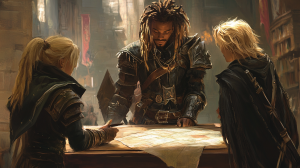
This scale has prevented any single empire, religion, or people from mastering the whole world. Maps remain incomplete. Borders are disputed. Remote valleys preserve customs forgotten elsewhere. A road shown on an imperial chart might pass through several independent territories, an enchanted forest, the domain of an ancient monster, and lands where the empire’s authority is remembered only as an old grievance.
The Shape of the World
A’erth resembles Earth in the arrangement of its great continents, oceans, rivers, and mountain ranges, but geography has been magnified and altered by magic, divine conflict, and supernatural history.
The Mediterranean connects some of the world’s oldest civilizations, religious traditions, and trade networks. The Danube carries merchants, soldiers, pilgrims, spies, and dangerous relics through the heart of Europe. The Carpathian Mountains divide kingdoms while sheltering hidden valleys, vampire domains, old gods, and ruins whose builders are no longer remembered.
Deserts contain cities separated by weeks of travel. Forests form regions large enough to hold nations beneath their branches. Northern tundras and steppes can swallow armies without leaving a monument. Oceans conceal islands, kingdoms, and creatures unknown to most scholars.
The size of A’erth makes the world feel ancient even where cities are new. Civilization exists as islands of roads, farms, walls, and law surrounded by stretches of land that have never been entirely claimed.
The Known World
A’erth contains hundreds of kingdoms, city-states, tribal territories, religious domains, free cities, and supernatural realms. The following regions represent the parts of the known world most relevant to the current age.
The United Kingdoms
The United Kingdoms are a western alliance of crowns, noble houses, religious authorities, and commercial interests. Their cities contain great cathedrals, guild halls, fortified roads, universities, embassies, and increasingly sophisticated workshops.
The Church of Lathander holds considerable influence within the United Kingdoms, though the degree of control varies between regions. Some rulers embrace the Church as a source of legitimacy and social order. Others tolerate its clergy while resisting its political ambitions.
Vienna stands near the eastern edge of this sphere. It serves as a crossroads between the United Kingdoms, Hungary, the Kingdom of the Bulgarians, and routes leading toward Russia. Merchants, diplomats, mercenaries, clergy, spies, alchemists, and adventurers pass continually through its gates.
Hungary
Hungary is a land of fortified settlements, deep forests, marshes, highland roads, ancient bloodlines, and supernatural dangers accepted elsewhere only as legend.
Vampires, werewolves, revenants, witches, and spirits are not merely stories told to frighten children. They are political forces, territorial threats, ancestral enemies, and, in some places, recognized rulers.
The Church of Lathander has established missions, monasteries, and alliances throughout the region, but its authority remains contested by local nobles, Old Faith communities, vampire domains, and traditions older than its arrival.
Barovia lies within Hungary, though geography, history, and the Mists have separated it from ordinary political life.
The Kingdom of the Bulgarians
The Kingdom of the Bulgarians preserves old imperial roads, mountain strongholds, dragon pacts, spirit traditions, and forms of worship that resisted western crusades and missionary expansion.
The Old Gods retain influence in its rural communities, sacred groves, lakes, and highlands. Great dragons, Vila, root spirits, drowned powers, and ancestral beings appear throughout local religion and folklore.
The kingdom’s relationship with the United Kingdoms is shaped by trade, religious competition, border disputes, and resentment over roads and institutions renamed by foreign powers.
The Byzantine Empire
The Byzantine Empire is a center of scholarship, diplomacy, wealth, spiritual authority, and carefully maintained tradition. Its cities preserve ancient texts, imperial rituals, magical colleges, and relics from civilizations that predate the present age.
The boundary between the mortal world and neighboring spirit realms is thin in parts of the empire. Its wardens guard mountain temples, ancient portals, and ruins where magic bleeds into the surrounding wilderness.
Greece and the Aegean
The lands of Greece remain shaped by gods, oracles, sacred islands, forgotten heroes, and monsters whose legends were never merely symbolic.
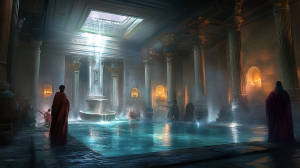
Prophecy retains political power. A dream interpreted at Delphi can alter a military campaign. A neglected shrine can awaken a curse. A ruined temple might still be inhabited by the being to whom it was dedicated.
Some sailors claim that Atlantis survives beneath the Aegean, preserved in eternal twilight and guarded by powers drawn from a lost age of magic and invention.
Egypt
Egypt is a land of great rivers, living temples, desert roads, tomb cities, divine dynasties, and mysteries older than most recorded empires.
The gods of Egypt do not exist only in scripture. Their priests receive visions, their champions bear supernatural marks, and their rivalries shape mortal institutions. The dead are preserved not merely as remembrance, but because death is a sacred passage that can be protected, redirected, or violated.
Pharaohs, priestly houses, tomb guardians, river seers, and arcane scholars maintain authority over cities where divine and mortal law remain inseparable.
Russia and the Northern Steppes
Russia extends across frozen wilderness, forests, volcanic lands, and open steppes where survival often depends upon mobility, local knowledge, and respect for unseen powers.
Orcs, trolls, spirits, witches, and elemental creatures inhabit regions beyond the control of settled rulers. Hidden covens and remote hermitages draw upon the raw power of ice, earth, wind, and fire.
Nomadic peoples, shamans, hunters, mercenaries, and exiled nobles travel enormous distances between the scattered settlements.
The Norse Realms
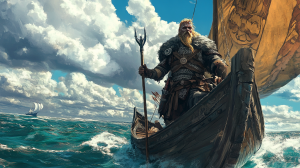
The Norse Realms are shaped by mountains, fjords, winter seas, giants, ancestral law, and traditions of fate.
Spirits and gods are woven into family histories and territorial claims. Rangers hunt jötnar across highlands, seers interpret the threads of coming events, and warriors carry obligations inherited from ancestors whose burial mounds remain active places of power.
East Asia
The empires of China and Japan contain ancient courts, monastic traditions, spirit roads, elemental sanctuaries, celestial beasts, sorcerous schools, and warrior cultures adapted to their own histories.
Kami, dragons, fox spirits, ancestral beings, and elemental powers maintain relationships with mortal communities. Some are worshipped. Others are negotiated with, bound, appeased, or hunted.
The great distances between eastern and western A’erth mean that information often arrives through merchants, diplomatic missions, pilgrims, and heavily embellished travelers’ accounts.
The Americas
The Americas contain numerous peoples, empires, sacred landscapes, spirit traditions, and supernatural powers distinct from those of Europe and the Mediterranean.
Across the northern lands, communities maintain relationships with animal spirits, ancestral guardians, dream paths, and the living memory of the land.
Farther south, Mesoamerican and South American civilizations preserve traditions associated with sacred calendars, sun gods, jaguar warriors, serpent powers, blood rites, and celestial cycles.
These lands are not empty frontiers awaiting discovery. They possess their own nations, histories, rivalries, trade systems, magical traditions, and claims upon the world.
Regional ranger traditions throughout A’erth reflect this diversity, including the Gravewalkers of Hungary, Horizon-Wardens of Egypt, Wyrdshadows of the Norse Realms, Shadowpetal Blades of Japan, Five Petal Wardens of China, and Jaguar-Blooded hunters of Mesoamerica.
Peoples of A’erth
Humans are the most widespread people across the known world, but they are not alone.
Elves, dwarves, halflings, orcs, goliaths, tieflings, dragon-blooded peoples, and other ancestries exist throughout A’erth. Their populations and relationships with humans vary significantly by region.
In parts of Eastern Europe, nonhuman peoples are rare and may be received with curiosity, fear, hostility, or religious suspicion. Elsewhere, dwarven enclaves control important mines and trade routes, elven communities maintain ancient forests, and nonhuman dynasties possess histories older than neighboring human kingdoms.
No single description applies across the entire world. An elf might be regarded as a dangerous faerie creature in one village, a respected diplomat in another, and an ordinary citizen within an elven-controlled region.
A person’s nationality, language, faith, profession, and local obligations generally matter more in daily life than broad racial categories. A human merchant from Vienna and a human priest from Alexandria might understand one another less easily than either understands a nonhuman neighbor from the same city.
Languages
A’erth has no universal Common tongue.
People speak the languages of their nations, communities, faiths, professions, and ancestries. Hungarian, German, Romanian, Bulghar, English, French, Greek, Russian, Italian, Spanish, Latin, Arabic, and numerous local languages coexist with Elvish, Dwarvish, Orkish, Infernal, Celestial, Draconic, and other supernatural tongues.
Trade cities develop multilingual populations, interpreters, coded dialects, and professional scribes. Isolated communities might speak a language that has changed little for centuries.
Language can open or close an entire region. A traveler unable to read local signs, understand prayers, or recognize the legal meaning of a title might miss dangers apparent to every resident.
Civilization and Daily Life
Most inhabitants of A’erth are not adventurers. They are farmers, fishers, craftspeople, servants, miners, soldiers, merchants, priests, healers, laborers, shepherds, scribes, and parents.
Daily life is shaped by the harvest, weather, taxation, religious observance, access to clean water, the condition of roads, and the protection offered by walls or local rulers. Even in a world of miracles, most wounds are treated with herbs, clean cloth, strong drink, and time.
Cities contain guilds, markets, workshops, temples, bathhouses, courts, taverns, hospitals, warehouses, and crowded residential districts. Their walls protect prosperity but also concentrate disease, crime, fire, political conflict, and supernatural predation.
Rural settlements depend upon seasonal labor and mutual assistance. Neighbors share tools, watch children, repair roofs, tend the sick, and gather quickly when wolves, soldiers, tax collectors, or stranger things appear.
The supernatural is not equally visible everywhere. A village might pass several generations without seeing a spell cast, yet maintain precise traditions for identifying a revenant, placating a river spirit, or determining whether a traveler is a vampire.
An Age of Steel, Spell, and Powder
A’erth stands between old and emerging forms of power.
Armored knights, spears, bows, and fortified castles remain important. At the same time, black-powder weapons, improved metalwork, alchemical compounds, precision instruments, and new approaches to scholarship are beginning to alter war and trade.
Firearms are expensive, loud, unreliable in poor conditions, and far from universal. A pistol can kill a noble or monster, but it still requires powder, shot, maintenance, training, and the opportunity to reload.
Magic has not made ordinary labor obsolete. Spells are powerful but limited, dangerous, politically controlled, or unavailable to most people. A bridge, aqueduct, grain store, or skilled healer remains valuable even in cities where wizards and clerics reside.
Anima
Magic on A’erth flows through a living force called Anima. It moves through creatures, soil, water, plants, sacred places, and the unseen structures of the world.
Spellcasters learn to connect with this current and shape it through training, instinct, devotion, bloodline, bargain, or ritual. Material components are generally unnecessary because casters draw directly upon Anima.
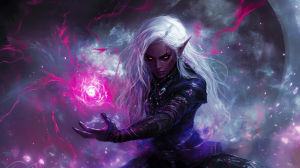
The connection is not always perfect. When magic fails to flow cleanly, the power must be drawn from somewhere else.
Sustainers accept the burden themselves. They channel unstable power through their own bodies rather than damaging nearby creatures or the land.
Ravagers draw the required power from others or from A’erth. Their magic can weaken living creatures, kill plants, and leave sterile circles of ash behind.
This distinction is moral, practical, and political. Some cultures treat Ravaging as an unforgivable corruption. Others permit it during war, famine, or extreme danger. A few magical traditions teach that all spellcasting takes something and that Sustainers merely conceal the cost within themselves.
Faith and the Gods
The gods of A’erth are many. They are benevolent, tyrannical, distant, intimate, generous, jealous, or difficult to understand.
Some are worshipped in cathedrals supported by kingdoms. Others receive offerings at crossroads, household shrines, caves, forests, riverbanks, graveyards, and ruined temples. A deity ignored by an empire may remain essential to the people of a single valley.
Divine power can arise through devotion, sacred office, inherited blessing, prophecy, oath, or pact. Clerics and paladins are not the only mortals touched by gods. Warlocks bargain with divine and semi-divine beings, while sorcerers can carry celestial or sacred power through their blood.
The presence of divine magic does not settle religious disputes. Two rival priesthoods can both perform miracles. Gods can disagree with their own institutions. A faithful servant might receive power while opposing the hierarchy that claims to represent the same deity.
Divine attention is rarely without consequence. Those who carry sacred power are watched, tested, rewarded, used, and sometimes destroyed by the beings they serve.
The Church of Lathander
The Church of Lathander is among the most influential religious institutions in western and central A’erth.
It teaches renewal, illumination, vigilance, and the triumph of dawn over darkness. Its clergy operate cathedrals, shrines, hospitals, schools, military orders, missions, archives, and charitable institutions.
The Church is not uniform. Missionaries, theologians, militant orders, healers, administrators, inquisitors, and political officials often disagree over how its principles should be applied.
In some places, the Church protects communities from undead creatures, dangerous magic, and predatory rulers. In others, its expansion threatens local traditions, transfers authority to foreign institutions, or treats compromise as heresy.
Its light can guide, heal, expose, command, or burn.
The Old Ways
Not every sacred tradition begins with a temple or written scripture.
Across A’erth, people preserve agreements with the land, ancestral spirits, faerie courts, sacred beasts, rivers, mountains, forests, and powers whose names predate current nations.
Rangers, druids, witches, village elders, spirit-speakers, and hereditary keepers maintain these relationships. Some defend the wilderness from civilization. Others protect settlements from what lives beyond their fields.
The Old Ways are not one religion. They are thousands of regional traditions united primarily by their connection to place, memory, and obligation.
An old shrine might remain active after the people who built it have disappeared. A road can remember the dead who traveled it. A forest might recognize a family that has honored the same agreement for twenty generations.
The wild places of A’erth are not empty. They are inhabited, claimed, watched, and remembered.
The Four Moons
Four moons cross the skies of A’erth. Their cycles influence magic, religion, agriculture, monsters, prophecy, and public observance.
Luna, the Silver Moon
Luna is associated with healing, protection, growth, renewal, and safe passage. Its light is favored by healers, travelers, druids, midwives, and those performing rites of restoration.
Luna reaches fullness every 28 days.
Ignis, the Crimson Moon
Ignis is associated with passion, war, creation, destruction, transformation, and uncontrolled ambition. Smiths, soldiers, revolutionaries, sorcerers, and certain cults watch its phases closely.
Ignis reaches fullness every 42 days.
Umbra, the Obsidian Moon
Umbra is associated with death, illusion, deception, necromancy, and the restless dead. Its rise can strengthen undead creatures, awaken battlefield memories, and weaken the boundary between the living and the grave.
Umbra reaches fullness every 56 days.
Nyxvasha, the Veiled Moon
Nyxvasha is associated with secrets, fate, prophecy, hidden knowledge, forgotten places, and uncertain paths. Its presence can disturb divination, open sealed ways, and bring dreams that reveal truths without explaining them.
Nyxvasha reaches fullness every 84 days.
Multiple full moons can produce powerful celestial events. Ritualists, rulers, military commanders, farmers, alchemists, and supernatural factions track these alignments because they can alter magical workings and the behavior of creatures throughout the world.
Timekeeping
A widely used calendar divides the year into twelve months.
Each month contains four weeks, each week contains seven days, and each month begins on a Monday and ends on a Sunday. This creates a 336-day year.
Regional calendars also exist. Religious traditions may count years from the founding of a temple, the reign of a dynasty, a celestial alignment, a divine appearance, or the end of a great war.
The year 3462 is widely recognized for trade and diplomatic purposes, but it is not the only date used throughout A’erth.
Other Planes
A’erth lies within the Material Plane, but it is not isolated from the wider cosmos.
The Feywild, Shadowfell, Astral Plane, elemental realms, celestial domains, infernal planes, and countless other worlds exist beyond ordinary perception.
Portals connect these places. Some are permanent structures guarded by temples or magical orders. Others appear only during particular moon phases, rituals, storms, anniversaries, or moments of great emotional intensity.
Sigil, the City of Doors, is known among planar scholars as a crossroads linking countless realities. Most people of A’erth will never see it, but travelers, summoned beings, lost relics, and strange currencies sometimes arrive through pathways originating there.
A doorway to another plane rarely looks important until it opens.
Adventurers in A’erth
Adventurers occupy an uncertain place in society.
They are hired when ordinary institutions cannot act, will not act, or cannot be trusted. Nobles employ them without granting military rank. Temples send them where official clergy would create diplomatic conflict. Merchants use them to recover cargo that cannot be acknowledged publicly. Villages seek their help when rulers have decided the cost of intervention is too high.
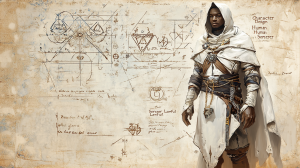
An adventuring company might serve as:
- caravan guards;
- relic hunters;
- monster slayers;
- Church agents;
- mercenaries;
- investigators;
- diplomats;
- explorers;
- protectors of a particular community;
- servants of a god, ruler, or supernatural patron;
- fugitives attempting to escape those same powers.
Adventurers possess unusual freedom, but that freedom has consequences. Their choices can destabilize noble houses, expose religious corruption, awaken ancient powers, redirect trade, begin wars, and determine which stories later become accepted history.
In A’erth, a local decision rarely remains local forever.
GM ONLY: A’erth
The Truth of the World
A’erth is not a disguised version of mundane Earth and should not be run as history with monsters added afterward.
Myth, religion, folklore, magic, and recorded history have all shaped the world materially. A legend might preserve a distorted account of an actual creature. A god can be both a cosmic power and the subject of contradictory regional traditions. A historical ruler might also have been a sorcerer, dragon-blooded champion, vampire, demigod, or reincarnated soul.
No single account is automatically the correct one.
Cultures interpret the same supernatural event differently. Later empires rename roads, rebuild temples, translate gods into their own theology, and claim older heroes as members of their faith. The underlying power may survive every reinterpretation.
When characters uncover an ancient site, the question is often not whether the old story was true. The useful question is which part of it remains active.
A World Larger Than Its Maps
The threefold scale of A’erth is a narrative principle, not a demand for exact planetary mathematics.
Use the world’s size to make travel, logistics, and regional identity matter. Crossing a mountain range should not feel like moving between neighboring encounter maps. It should require guides, food, weather planning, safe roads, political permission, and decisions about what must be left behind.
A long journey can contain entire adventures without becoming a string of random combats. Use:
- damaged bridges;
- religious processions;
- tax stations;
- seasonal flooding;
- caravan politics;
- unfamiliar languages;
- local festivals;
- disputed borders;
- closed mountain passes;
- sacred lands;
- military patrols;
- monster territories;
- settlements that appear on no current map.
Fast travel should require magic, exceptional resources, or access to a faction capable of maintaining secure routes.
Overlapping Histories
A’erth’s locations should possess layers.
A cathedral might stand over a Roman temple, which was built over a sacred spring, which emerged from a place where Anima reaches the surface.
A fortress might have served five kingdoms without any of them constructing its deepest level.
A road might carry three names:
- the name given by its builders;
- the name imposed by its conquerors;
- the name still used by the people who live beside it.
Ashwain Stones demonstrates this principle. The site was sacred long before the Church claimed the region, and its older sun and horizon symbols remain beneath later religious interpretations.
When designing a location, determine:
The First Claim. Who first treated the place as sacred, useful, or dangerous?
The Current Claim. Who controls it now?
The Buried Claim. What power still believes the place belongs to it?
Anima as a Living System
Anima should not function merely as another name for magical energy.
It is the relationship between magic and the living world. Spellcasting redirects a current already present in creatures, land, memory, and matter. Most spells return that energy without lasting harm, but failed or extreme workings expose the cost.
The Ravager and Sustainer distinction makes magical ethics visible.
A Sustainer accepts personal harm rather than forcing the cost upon others. This can be admirable, but repeated self-sacrifice can become another form of pride, secrecy, or control.
A Ravager externalizes the cost. This can be cruel, desperate, culturally accepted, or strategically justified. A village mage might defile a field to stop an undead army, knowing the resulting famine will arrive months later.
Do not reduce every Ravager to a cackling villain or every Sustainer to a saint. The meaningful question is who bears the cost of power and who was permitted to make that decision.
Anima Scars
Repeated magical harm can create an Anima scar.
Anima scars include:
- circles of sterile ash;
- forests where no new seedlings grow;
- battlefields that replay moments of death;
- springs that heal one condition while spreading another;
- animals born with shared memories;
- roads that return travelers to the same place;
- ruins where spells continue long after their casters died;
- regions where one school of magic becomes unusually powerful or dangerous.
Anima scars are useful foundations for dungeons, haunted locations, magical resources, regional curses, and disputes between factions.
An old scar can be worshipped, exploited, contained, or misunderstood. Removing it might also destroy the community or supernatural ecology that has adapted around it.
The Gods Are Real, Not Simple
The gods exist, but their nature should remain larger than a stat block.
A deity can grant power without approving every action of its Church. A priest can perform genuine miracles while serving a corrupt institution. A heretic might understand an aspect of the god that official scripture suppresses.
Divine conflict should operate through:
- doctrine;
- dreams;
- chosen champions;
- relics;
- sacred geography;
- miracles;
- curses;
- competing interpretations;
- mortal institutions acting in a god’s name.
Direct divine appearances should be rare enough to remain transformative. Most people experience gods through intermediaries, consequences, rituals, answered prayers, and events that could still be doubted by those determined to doubt them.
The Moons as Campaign Clocks
The four moons provide visible campaign clocks.
Before an adventure, determine which moon is waxing, waning, or approaching fullness. Use the result to influence:
- available rituals;
- monster behavior;
- spell manifestations;
- dreams;
- public observances;
- faction activity;
- alchemical ingredients;
- travel conditions;
- religious sermons;
- local superstition.
Umbra’s influence is particularly useful for necromantic and horror adventures. Under its full light, mandrake grows in cursed battlefields, illusions strengthen, the dead become restless, and the veil between life and death weakens.
Avoid making every lunar effect a numerical bonus. A moon should first change what is happening in the world.
Regional Truth
Do not portray a region as a single culture.
Every nation should contain:
- cities and rural communities;
- dominant and suppressed religions;
- wealthy and poor populations;
- official histories and local memories;
- communities that benefit from the current order;
- people who survive despite it;
- internal political divisions;
- regional languages and customs.
The Old Ways should not always be benevolent. The Church should not always be oppressive. Empires build roads and impose taxes. Vampire rulers can suppress worse predators while feeding upon their subjects. Revolutionary movements can expose injustice while leaving villages undefended.
A’erth works best when every institution provides something people need and demands something in return.
Human-Centered Regions
The starting regions of Crimson Twilight are human-centered, particularly Vienna, Hungary, and Barovia. Nonhuman characters should therefore be noticeable.
Use this attention to establish local culture rather than punish character choice constantly. Reactions might include:
- curiosity;
- religious concern;
- requests for proof of identity;
- assumptions based upon folklore;
- fascination from children;
- inflated prices;
- invitations from scholars;
- fear following an unrelated supernatural event;
- recognition by someone familiar with the character’s people.
Once a character becomes known within a community, their actions should matter more than their ancestry.
Knowledge of A’erth
The following information is cumulative. Characters automatically know the ordinary geography, history, language, and religion of their home region.
Intelligence (History)
DC 10: The current year is 3462. A’erth contains familiar nations and cultures shaped by openly supernatural history.
DC 15: The world’s enormous distances have limited central authority and allowed regional cultures, faiths, and magical traditions to remain distinct.
DC 20: Many modern institutions occupy sites claimed by older religions and vanished empires. Official histories frequently rename or reinterpret what came before.
DC 25: Several major political and religious settlements were designed partly to contain supernatural powers whose participation has been removed from public records.
Intelligence (Arcana)
DC 10: Magic flows through A’erth as Anima, and celestial cycles can influence magical workings.
DC 15: Failed connections to Anima force spellcasters to draw power from themselves, nearby life, or the surrounding land.
DC 20: Regions damaged by repeated magical extraction can develop persistent Anima scars.
DC 25: Certain ancient sites appear to regulate, divide, redirect, or sever connections to Anima rather than merely channeling magical power.
Intelligence (Religion)
DC 10: Multiple pantheons grant genuine divine power. No single religion can dismiss all others as powerless superstition.
DC 15: A deity’s servants and institutions can disagree while retaining access to divine magic.
DC 20: Later faiths often build upon, rename, or absorb sacred sites belonging to older traditions.
DC 25: Some ancient religious agreements were made with land spirits, monsters, vampire courts, and other powers omitted from official doctrine.
Intelligence (Nature)
DC 10: A’erth’s moons influence tides, agriculture, animal behavior, and many supernatural creatures.
DC 15: Plants and magical ingredients can require specific lunar phases, sacred environments, or supernatural conditions.
DC 20: Unnatural silence, sterile soil, altered growth, or repeated animal behavior can indicate damage to Anima.
DC 25: The land can preserve memory, obligation, and magical intent long after the people responsible have vanished.
Running A’erth
Every A’erth location should answer four practical questions.
What keeps people alive here?
Food, water, trade, protection, labor, or supernatural aid.
Who controls access to it?
A ruler, guild, Church order, family, spirit, monster, or local custom.
What older power remains?
A forgotten god, displaced people, buried city, ancient compact, or Anima scar.
What happens if the characters intervene?
Who benefits, who loses protection, and what obligation replaces the one they break?
The world should feel dangerous without feeling empty. Roads carry pilgrims. Fields must be harvested. Children play in courtyards. Soldiers complain about pay. Priests argue over budgets. Monsters exist beside communities that still celebrate marriages, repair roofs, brew beer, and prepare for winter.
Hope exists because people continue building lives in places where darkness would prefer them merely to survive.
Signs of A’erth’s Nature
Use the following details to remind players that this is not mundane Earth:
- Three moons remain visible while the fourth appears only as a distortion in the stars.
- A farmer leaves part of a field unharvested for the spirit that owned it first.
- A cathedral incorporates stones carved with the symbols of an older god.
- A pistol hangs beside a sword blessed by a saint.
- A merchant carries letters in four languages and a charm against river ghosts.
- A city gate closes early because the road is safe from bandits but not from the dead.
- A village healer consults both a medical text and the phase of Luna.
- A noble genealogy includes an ancestor officially listed as reigning for 137 years.
- A forest path appears only to travelers carrying no worked iron.
- An imperial milestone bears three names, each chiseled over the last.
- A spell leaves frost, flowers, ash, whispered voices, or another sign of the Anima it disturbed.
- People debate whether a local monster should be killed, taxed, worshipped, or recognized as the lawful ruler.
Adventure Use
The Road Removed from History
An imperial archive contains toll records for a major road absent from every modern map. Villages along the route still pay taxes to someone.
The Fifth Foundation
Workers expanding a cathedral uncover four older sacred structures beneath it. The fifth layer was built to face downward.
The Ashen Harvest
A province enjoys an impossible abundance of grain while neighboring lands fail. The harvest is being sustained by draining Anima from somewhere else.
The Moon Without a Name
For one night, observers see a fifth shape moving between the four moons. Every divination performed before dawn gives the same location.
The Two True Histories
Two nations possess contradictory accounts of the same ancient battle. Spirits at the battlefield remember both versions.
The God at the Border
A border treaty cannot be renewed because one of its original signatories was a river god whose course has changed.
The Mapmaker’s Heresy
A cartographer proves that several distant sacred sites form a single geometric pattern across the continent. Completing the pattern would require adding one final site.
Development
As characters gain influence, their actions should reshape more than individual encounters.
They might:
- alter a trade route;
- legitimize or destroy a local ruler;
- restore an Old Way compact;
- expose a suppressed history;
- create or heal an Anima scar;
- change relations between a Church and local faith;
- open a passage between planes;
- influence how a moon is understood or observed;
- connect communities separated by the world’s scale;
- become part of the history later generations argue about.
A’erth does not need the characters to save the entire world at once.
It needs them to decide what the world becomes wherever they stand.
Notes
0 notes on this entry
Sign in to leave a note. Sign in.