Vampire Clans
Classification: Supernatural Bloodlines and Secret Societies
Primary Region: Europe and the Mediterranean
Reach: Transregional
Status: Active and Hidden
Overview
Vampires are found throughout A’erth, though they are most frequently associated with the ancient cities, feudal courts, mountain strongholds, and forgotten burial grounds of Europe and the Mediterranean. Most common folk speak of vampires as though they are a single kind of monster. Hunters, theologians, and occult scholars instead describe distinct bloodlines known as clans, each shaped by inherited powers, weaknesses, customs, and ideas about how the undead should exist among the living.
A vampire’s clan is usually determined by the vampire who created them. This relationship is described in surviving accounts through the language of blood and family: the creator is a sire, the newly made vampire is a childe, and older vampires trace their lineage backward through generations of predation. Some clans maintain elaborate genealogies comparable to noble houses. Others preserve their ancestry through oral histories, scars, coded manuscripts, or memories carried by the blood itself.
The six clans most commonly identified in western scholarship are the Brujah, Lasombra, Malkavian, Nosferatu, Tremere, and Ventrue. These names appear in inquisitorial records, forbidden theological works, court testimonies, and the private journals of vampire hunters. Whether these are the only clans in existence remains disputed.
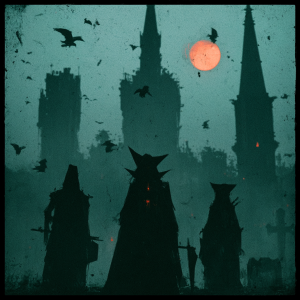
The Six Clans
- Brujah are associated with rebellion, martial strength, passionate conviction, and opposition to established authority. Some stories portray them as liberators who rise against tyrants. Others describe violent agitators who replace one form of oppression with another.
- Lasombra are remembered as masters of influence, shadow, and institutional power. Tales place them behind noble courts, religious hierarchies, mercantile alliances, and rulers who rarely realize how thoroughly their decisions have been guided.
- Malkavians are described as prophets, visionaries, and madmen. Their utterances are often dismissed as nonsense until later events give them meaning. Scholars disagree over whether their affliction grants supernatural insight or merely makes truth impossible to separate from delusion.
- Nosferatu are said to bear their curse visibly, their bodies altered into forms that cannot easily pass among ordinary people. They dwell beneath cities, within ruins, and along forgotten roads, gathering secrets traded among both mortals and the undead.
- Tremere are closely associated with blood sorcery, ritual experimentation, and the deliberate study of vampirism. Their enemies accuse them of treating the curse as a tool to be refined, measured, and controlled rather than an inheritance to be endured.
- Ventrue cultivate authority, lineage, and command. They are commonly linked to old aristocracies, military dynasties, royal courts, and the belief that the strongest and most disciplined should rule both mortals and vampires.
Clan and Allegiance
Clan does not determine loyalty. Two vampires of the same bloodline might serve opposing kingdoms, religions, or masters. A Brujah revolutionary may despise another Brujah who has become a warlord, while a Ventrue ruler might cooperate with a Lasombra advisor for centuries before turning against them.
Vampires also form courts, cults, conspiracies, households, and temporary alliances that cross clan boundaries. These associations often matter more in daily affairs than bloodline alone. Clan provides inheritance and expectation, but it does not erase ambition, faith, fear, or personal history.
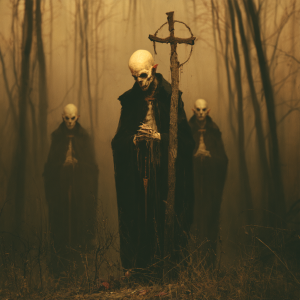
Older vampires tend to place greater importance on lineage. Younger vampires are more likely to resent the obligations imposed by their sires, particularly when they were transformed without consent. Such conflicts can endure for generations.
Vampires and Mortal Society
Most vampires survive through concealment. They operate through mortal servants, loyal families, corrupted officials, dependent lovers, paid agents, and supernatural retainers. Some rule isolated territories openly, but most prefer influence that cannot easily be traced back to them.
A vampire’s mortal household may continue for generations. The vampire becomes a concealed patron, ancestral protector, family curse, or secret master whose name is spoken only within locked rooms. A household might receive wealth, longevity, political influence, or protection in exchange for blood and obedience.
The Church of Lathander teaches that vampirism is a corruption of death and renewal. Its clergy distinguish between mercy toward the afflicted and tolerance of predation, though different Church orders disagree sharply over whether a vampire can resist its nature for any meaningful length of time. In regions where the Church lacks political control, local authorities often choose negotiation, tribute, or silence over open confrontation.
Identifying Clan Influence
Clan membership is rarely declared openly. Heraldry, dress, speech, servants, and preferred methods can suggest an affiliation, but none provide certainty. Vampires are aware of the stories told about their clans and sometimes imitate another clan’s customs to mislead enemies.
Experienced hunters therefore judge behavior before symbols. They ask who benefits, who has been silenced, what kind of victim was selected, and whether the vampire seeks blood, knowledge, obedience, terror, or political control.
Encounters with Vampire Clans
Adventurers are more likely to encounter a vampire’s agents than the vampire itself. A clan might employ the characters to recover a stolen relic, eliminate a rival, escort a mortal descendant, investigate an uncontrolled fledgling, or negotiate with a hostile Church order.
Such employment is rarely presented honestly. A request to recover family property might concern a coffin, an ancestral ledger, or a vessel containing preserved blood. A hunt for a murderous creature might be an attempt to destroy a rebellious childe. Protection offered against one vampire may create an obligation to another.
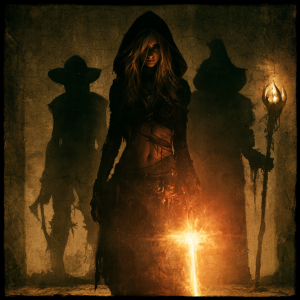
Those dealing with suspected vampires should pay close attention to hospitality, invitation, ownership, and promises. Vampires who have survived for centuries tend to treat spoken agreements as weapons. Even a sincere offer may be phrased so that refusal carries consequences and acceptance creates obligations the mortal did not recognize.
GM ONLY: Vampire Clans
The Truth
The clans are real supernatural bloodlines rather than categories invented by hunters. A vampire inherits aspects of its sire’s curse, including characteristic powers, compulsions, weaknesses, and instincts. These inherited qualities shape behavior but do not eliminate free will. Individual vampires remain capable of violating clan customs, resisting their sires, changing political allegiance, or developing beliefs that place them at odds with their own bloodline.
The clans do not form a single vampire nation. Their elders compete over territory, mortal institutions, feeding rights, relics, sorcerous knowledge, and influence over younger vampires. Temporary alliances are common, particularly when mortal rulers, hunters, or religious movements threaten the continued existence of all vampires in a region.
In Barovia, the vampire clans existed before the formal signing of the Concord of Dawn and Dusk in 3412. Most vampire powers favored secrecy, hierarchy, and negotiated stability. The Brujah were a major exception, with several cells demanding either open rule or open war rather than accommodation with the Church. The failed movement beneath the Durst Estate grew from this conflict, though the Dursts themselves were mortal collaborators rather than true vampires.
The Concord ended open conflict between the Church of Lathander and the powers governing Barovia. Its public terms allow the Church to minister to the people while recognizing Strahd’s authority and refusing to sponsor rebellion. Its hidden consequences included suppressed records, abandoned investigations, and institutions trained to avoid questions that might disturb the settlement.
Strahd should not be treated as the leader of all vampire clans. He is the absolute ruler of Barovia and a power other vampires must acknowledge within his domain, but clan elders elsewhere possess their own territories, ambitions, and rivalries. Even vampires who obey Castle Ravenloft may do so because of fear, political necessity, or imprisonment rather than bloodline loyalty.
Goals and Methods
Vampire factions generally pursue some combination of the following goals:
- Survival. Preserve secrecy, reliable access to blood, defensible shelter, and protection from hunters.
- Dominion. Establish control over a household, institution, settlement, trade route, court, or territory.
- Lineage. Protect favored descendants, punish rebellious childer, preserve bloodline records, and prevent rivals from learning ancestral weaknesses.
- Influence. Shape mortal law, religion, war, commerce, and scholarship without assuming the risks of open rule.
- Transcendence. Overcome or reshape the vampiric curse through blood sorcery, divine intervention, ancient relics, forbidden pacts, or control over Anima.
Their preferred methods depend heavily upon clan. Brujah tend toward direct action, agitation, and uprising. Lasombra cultivate dependency and institutional compromise. Malkavians manipulate knowledge, fear, and prophecy. Nosferatu control information and access. Tremere rely upon ritual, research, and tightly guarded magical systems. Ventrue build hierarchies of obligation and command.
Knowledge of the Vampire Clans
The following information is cumulative. Characters belonging to an established order of vampire hunters might know the DC 10 information without a check. A character with direct experience of a particular clan can make checks concerning that clan with advantage.
Intelligence (Religion or History)
DC 10: The character knows that learned hunters divide vampires into clans and can name the Brujah, Lasombra, Malkavian, Nosferatu, Tremere, and Ventrue. They know the broad reputation of each clan described in the player-facing entry.
DC 15: The character understands that clan passes from sire to childe and that vampires often maintain genealogies comparable to noble bloodlines. Clan does not determine political loyalty, and mixed-clan courts are common.
DC 20: The character knows that clans possess inherited supernatural distinctions, not merely cultural traditions. They also know that vampires frequently influence mortal institutions through families, servants, cults, and dependent officials rather than ruling openly.
DC 25: The character has encountered fragments suggesting that powerful religious and political authorities have negotiated formal settlements with vampire rulers. Records concerning these agreements are rare, censored, and dangerous to possess.
Intelligence (Arcana)
DC 12: Vampirism is both necromantic and transformative. A newly created vampire is altered by the nature of its sire rather than animated as a simple corpse.
DC 16: Blood can carry memory, compulsion, magical resonance, and traces of lineage. Some occultists can identify a clan through prolonged examination of a vampire’s blood.
DC 20: The Tremere and certain independent sorcerers have developed rituals capable of altering blood bonds, tracing lineage, awakening dormant traits, or concealing clan identity.
DC 25: Certain ancient vampires can suppress obvious signs of their clan, imitate traits associated with another lineage, or alter the curse inherited by a childe. Such acts are exceptionally rare and usually require powerful blood sorcery or intervention by an elder.
Wisdom (Insight)
A character who spends at least 10 minutes speaking privately with a vampire or experienced thrall can attempt a Wisdom (Insight) check. This does not reveal that the creature is a vampire automatically.
DC 15: The character notices that the individual treats hospitality, obligation, and permission with unusual care.
DC 18: The character recognizes that the speaker is evaluating relationships through dominance, dependency, lineage, or ownership rather than ordinary social status.
DC 22: The character identifies behavior consistent with a particular clan’s methods. This provides a strong suspicion, not certainty.
Running Vampire Clans
Do not have most vampires announce their clan. Clan should emerge through priorities, methods, relationships, and the way the vampire uses mortals.
Vampires have had time to become patient. Even an impulsive vampire understands that direct violence creates witnesses, hunters, and inconvenient corpses. Elders rarely threaten when they can offer protection, create dependency, or arrange for someone else to commit the violence.
When portraying a vampire, determine four things:
- What does it hunger for beyond blood? Authority, freedom, recognition, knowledge, beauty, revenge, prophecy, or belonging.
- What mortal institution protects it? A noble household, criminal network, monastery, guild, military unit, university, or isolated village.
- What does it refuse to admit about its sire? Fear, loyalty, love, resentment, dependence, or the desire to become exactly like them.
- What boundary does it still observe? A religious taboo, promise, feeding restriction, family obligation, rule of hospitality, or remnant of mortal conscience.
A vampire becomes more memorable when its monstrosity is expressed through choices rather than constant displays of supernatural power.
Signs of Their Presence
Use one or more of the following details before revealing a vampire or clan agent:
- A noble family’s records continue for centuries, but portraits repeatedly show the same unnamed advisor.
- Servants prepare a private dining room every evening although no guest is ever seen entering it.
- Letters are delivered shortly before sunset and must be answered before dawn.
- A missing person’s debts are quietly paid after their disappearance.
- A local official protects one abandoned property with unusual intensity.
- Victims are selected according to profession, ancestry, reputation, or political usefulness rather than convenience.
- A household maintains strict rules concerning invitation, locked rooms, mirrors, or access to its cellars.
- Several unrelated people repeat the same unusual phrase when questioned about a local patron.
Representatives
The Elder. An ancient vampire whose authority rests upon territory, lineage, and obligations accumulated over centuries. The elder rarely appears unless protocol, pride, or a significant threat demands it.
The Envoy. A socially capable vampire or trusted mortal agent empowered to negotiate feeding rights, exchange prisoners, arrange alliances, or deliver warnings.
The Retainer. A ghoul, enthralled servant, dependent family member, or willing collaborator who conducts the faction’s daily business and protects its secrets.
The Fledgling. A recently transformed vampire whose hunger, uncertainty, and incomplete understanding make them dangerous to mortals and politically inconvenient to their sire.
The Exile. A vampire cut off from its clan, court, or creator. An exile may become a valuable informant, desperate ally, uncontrolled predator, or agent pretending to have nowhere else to turn.
Resources and Influence
A well-established vampire faction might possess:
- accumulated wealth and property;
- genealogical and historical archives;
- mortal families bound by generations of service;
- spies within courts, guilds, churches, and criminal networks;
- safe houses and concealed resting places;
- access to forbidden magic and lost history;
- supernatural servants and dependent childer;
- influence over local law and commerce;
- information preserved by witnesses who never died naturally.
Its influence is limited by sunlight, hunger, internal rivalry, territorial boundaries, religious wards, the unreliability of mortal servants, and the constant possibility that an old enemy remembers something everyone else has forgotten.
Complications
A Divided Court. The vampire who hired the characters does not speak for every member of its household. A rival childe intends to sabotage the agreement.
The Useful Monster. The local vampire prevents something worse from entering its territory. Destroying it removes that protection.
Inherited Obligation. An agreement made by an ancestor, former ruler, or religious official is considered binding upon the characters or their patron.
A False Clan. Evidence points toward one clan because another vampire has deliberately adopted its methods.
The Unwilling Childe. The apparent villain was transformed against their will and is being forced to act through a blood bond, threat, or dependence upon their sire.
Adventure Use
The Empty Seat. A city’s ruling council has maintained an unused seat for generations. When an adventurer is appointed to it, sealed instructions reveal that the absent councilor expects tribute after sunset.
Blood in the Archive. A genealogical manuscript capable of identifying a vampire elder’s mortal descendants is stolen from a Church archive. Several clans want it recovered, altered, or destroyed.
The Broken Hospitality. A vampire envoy is murdered while under the protection of a mortal ruler. Unless the killer is identified, an old agreement will collapse and several clans will begin settling the matter themselves.
The Unclaimed Childe. A newly transformed vampire appears with traits associated with two different clans. Hunters, Tremere scholars, and the vampire’s possible sires all begin searching for them.
Development
Faction relationships should develop with individual courts, households, and clan representatives rather than with “all vampires.”
A vampire faction becomes more cooperative when characters:
- keep confidential agreements;
- respect established hospitality;
- return valuable clan property;
- resolve an uncontrolled feeding problem discreetly;
- provide useful information about a rival;
- demonstrate that they can negotiate without becoming servants.
A vampire faction becomes hostile when characters:
- expose its mortal agents publicly;
- violate sanctuary or hospitality;
- destroy a childe without acknowledging the sire;
- interfere with feeding arrangements;
- reveal hidden lineage records;
- accept an agreement and then deny that an obligation was created.
Vampires remember both assistance and insult long after mortal governments, laws, and witnesses have disappeared.
Notes
0 notes on this entry
Sign in to leave a note. Sign in.