Tremere Clan
Also Known As: The Blood Scholars, the Crimson Hierarchy
Classification: Vampire Clan and Arcane Order
Primary Region: Central Europe, particularly Transylvania and the Carpathian scholastic enclaves
Reach: Transregional
Status: Active, Secretive, and Hierarchical
Overview
The Tremere are a vampire clan of sorcerers, alchemists, physicians, and occult scholars who study blood as both a living substance and a vessel of supernatural power. Other vampires inherit their abilities through instinct, lineage, and the teachings of their sires. Tremere seek to identify the principles beneath those gifts, record them, reproduce them, and place them under disciplined control.
Their strongholds are known as chantries. These fortified colleges combine the functions of monastery, laboratory, archive, and court. Within them, apprentices study anatomy, alchemy, necromancy, protective wards, the properties of Anima, and the inherited qualities of vampiric blood. Every discovery is catalogued. Every experiment is witnessed. Every failure becomes part of the record.
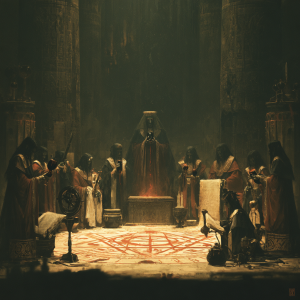
Tremere influence is strongest across Central Europe, particularly in Transylvania and the Carpathian regions where arcane traditions, vampire domains, ancient ruins, and contested religious authority overlap. Smaller chantries and hidden laboratories operate in major cities, university districts, noble estates, and isolated monasteries throughout Europe.
The clan is feared because it refuses to accept that vampirism must remain mysterious. To the Tremere, a curse that can be observed can be studied. A power that can be studied can be repeated. A weakness that can be repeated can eventually be controlled.
Blood and Anima
A’erth’s spellcasters draw magic from Anima, the living current that flows through the world and shapes reality. When that connection fails, the required power must be drawn from the caster, another creature, or the surrounding land. This choice distinguishes Sustainers, who accept the burden themselves, from Ravagers, who allow others or A’erth to bear the cost.
Tremere scholars argue that blood functions as a natural reservoir of Anima. It carries life, memory, ancestry, emotion, and the imprint of supernatural transformation. Vampiric blood is especially potent because undeath prevents its stored power from returning fully to the world.
Through blood sorcery, Tremere preserve and redirect this energy. A ritual might use blood to strengthen a ward, trace a creature’s ancestry, awaken a memory, carry a command, bind an oath, or power magic that would otherwise draw directly upon the caster or the land.
The clan presents this practice as controlled stewardship. Its critics describe it as Ravaging performed with cleaner instruments.
Tremere distinguish between blood freely given, blood taken through violence, and blood altered by supernatural influence. These categories matter ritually, though not every chantry gives them equal moral weight.
Organization and Membership
The Tremere maintain the most formal hierarchy of the major vampire clans. Authority is established through rank, apprenticeship, access to restricted knowledge, and proven magical competence.
A typical chantry is led by a Regent, who oversees its research, political relationships, security, and adherence to clan law. Below the Regent are senior scholars commonly called Magisters, each responsible for a field of study, collection, or circle of apprentices.
Younger Tremere advance through degrees of initiation. Promotion grants access to additional laboratories, texts, rituals, and blood archives. Rank is not merely ceremonial. A low-ranking member may know that a ritual exists without being permitted to learn its complete form.
Tremere sires favor wizards, alchemists, physicians, scribes, ritualists, theologians, and others who combine intellectual discipline with ambition. A prospective childe is often observed for years before transformation. The clan wants researchers capable of obedience, but it also needs minds able to recognize what their teachers have overlooked.
This creates a persistent contradiction. The Tremere reward discovery while tightly controlling who may act upon it.
Chantries
A Tremere chantry is designed around containment. Thick walls, controlled entrances, layered wards, restricted chambers, and carefully documented inventories protect both the clan and the surrounding settlement from its work.
The public face of a chantry might be an alchemical college, private medical house, astronomical society, noble library, university residence, or monastery devoted to obscure scholarship. Its lower chambers contain the blood laboratories, ritual halls, holding rooms, and archives that define its true purpose.
Most chantries maintain several distinct collections:
- The Red Archive preserves blood samples, genealogical records, ritual observations, and accounts of supernatural diseases.
- The Restricted Library contains dangerous magical texts, failed rites, clan secrets, and discoveries withheld from lower-ranking members.
- The Crucible Chambers are laboratories where blood, Anima, alchemical substances, and enchanted objects are tested under controlled conditions.
- The Circle Hall provides space for complex ceremonies requiring multiple participants, anchored wards, or precise geometric arrangements.
- The Cold Vaults preserve blood, organs, remains, and other materials that would decay under ordinary conditions.
- Tremere prefer secure laboratories to improvised ritual sites. Their greatest disasters tend to occur when confidence in their safeguards exceeds understanding of what they have contained.
Blood Sorcery
Blood sorcery is not a single school of magic. It is a method of using blood to carry, concentrate, identify, redirect, or preserve supernatural force.

Known Tremere practices include:
- tracing a creature through its blood;
- identifying vampiric lineage;
- preserving memories within sealed vessels;
- creating wards that recognize specific bloodlines;
- strengthening the loyalty or dependence created by vampiric blood;
- transferring wounds, vitality, or magical conditions;
- concealing the supernatural nature of a creature;
- awakening inherited powers;
- weakening a vampire by attacking its lineage rather than its body;
- storing Anima for later rituals.
Many of these practices require carefully prepared circles, measured quantities, written records, and repeated observation. The Tremere dismiss uncontrolled ritual as superstition, even when their own procedures rely upon symbols whose origins they cannot explain.
Their scholarship has made them indispensable to vampire courts facing curses, magical contamination, rebellious childer, blood-borne plagues, or rival sorcerers. It has also ensured that few courts permit Tremere researchers access without supervision.
Hierarchy and Obedience
Tremere teaching emphasizes that dangerous knowledge must be controlled by those prepared to use it. Apprentices are expected to follow ritual procedure precisely, record unexpected results, and defer to senior scholars when the consequences of error are unknown.
This discipline prevents many catastrophes. It also creates opportunities for abuse.
A Regent can suppress a discovery, isolate a dissident, confiscate research, or declare an experiment too dangerous for anyone outside the chantry leadership to review. A younger Tremere who discovers misconduct must decide whether exposing it protects the clan or violates the hierarchy that preserves it.
The clan maintains elaborate systems of oaths, sponsorship, and responsibility. A Magister is accountable for the conduct of their apprentices. A failed experiment can damage an entire scholarly lineage, while a major discovery elevates both the researcher and those who trained them.
Tremere therefore compete through students as much as through personal achievement.
Relations with Mortals
Tremere cultivate relationships with scholars, physicians, alchemists, undertakers, scribes, midwives, executioners, and officials responsible for births, deaths, inheritance, and disease. Such people handle the substances and records upon which blood research depends.
A mortal associate may believe they serve a private medical society or arcane college. They might collect unusual blood samples, report hereditary illnesses, preserve bodies, translate forbidden texts, or record unexplained magical symptoms without knowing how the information is used.
Some Tremere provide genuine medical and magical assistance. Their understanding of blood enables them to diagnose curses, poisons, supernatural infections, and conditions ordinary healers cannot identify. The treatment may still require invasive examination, dangerous experiments, or an agreement granting the chantry access to the patient’s future medical history.
The clan is also known to purchase condemned prisoners, unclaimed corpses, and rights to examine the dead. Authorities willing to accept Tremere coin rarely ask how sharply the distinction between corpse and subject is maintained.
Relations with Other Vampire Clans
The Tremere are useful, feared, and widely distrusted.
Ventrue employ them as advisors on lineage, succession, blood bonds, and supernatural threats. They rarely permit Tremere to maintain independent influence within their courts.
Lasombra respect Tremere discipline but object to their habit of placing knowledge above political judgment. Both clans understand institutional power, making their alliances efficient and their rivalries methodical.
Brujah accuse the Tremere of transforming domination into scholarship. Tremere answer that Brujah revolutions produce more uncontrolled bloodshed than any chantry laboratory.
Nosferatu trade lost texts, rare samples, subterranean access, and information concerning hidden magical sites. Both sides assume the other is withholding the most valuable part of every exchange.
Malkavians are subjects of intense Tremere interest because their blood appears to carry shared dreams, memories, and prophetic resonance. Wise Tremere researchers approach them cautiously. Unwise ones believe psychic fracture can be isolated, measured, and reproduced.
No clan likes discovering that the Tremere possess a sample of its blood.
The Church of Lathander
The Church of Lathander officially condemns Tremere blood sorcery as a corruption of life, death, and Anima. Its theologians argue that blood is entrusted to the living body, not granted as raw material for occult experimentation.
The Church’s practical relationship with the clan is more complicated. Tremere knowledge has helped identify vampire bloodlines, diagnose supernatural afflictions, break minor blood bonds, and contain magical contamination. Clergy facing an unknown curse may condemn the source of an answer while still using it.
Some Church archives preserve Tremere research under heavy restriction. Such collections are typically described as studies of vampirism, failed rituals, or dangerous arcane practice rather than acknowledged collaboration.
Scarlet Dawn officials are most likely to seize Tremere methods for use against enemies. Silver Dawn investigators may consult carefully selected scholarship while rejecting its crueler applications. The Dawnbound Conclave considers the clan’s understanding of containment valuable but fundamentally compromised.
Symbols and Traditions
The Tremere are associated with a downward-pointing triangle divided by precise lines, often surrounded by a circle or marked with drops of blood. Variants may include an open eye, a chalice, interlocking rings, or a geometric flame.
Deep red, black, ivory, and bronze dominate their robes, seals, laboratory markings, and manuscripts. Rank is sometimes shown through the number or arrangement of narrow bands embroidered around the cuffs and collar.
Common Tremere sayings include:
- “What the blood carries, the circle can reveal.”
- “Record the failure before correcting it.”
- “Mystery is only ignorance protected by time.”
- “Power without method is waste.”
- “The vessel remembers.”
- “A sealed truth remains dangerous.”
- “Control begins with measurement.”
Before beginning a major experiment, Tremere researchers commonly state the ritual’s purpose, expected result, acceptable variance, and conditions requiring immediate termination. Survivors of failed Tremere rites know how often the final condition is debated after it has already occurred.
Encounters with the Tremere
Adventurers might encounter the Tremere while investigating a magical disease, identifying an unknown vampire, seeking treatment for a blood bond, examining a supernatural wound, or recovering an arcane manuscript.
A chantry might hire characters to obtain a rare sample, recover stolen research, escort an apprentice, investigate a failed ritual, or retrieve an artifact from a site where the chantry cannot operate openly.
Tremere patrons prefer exact agreements. They define what must be recovered, what condition it should remain in, who may examine it, and what information the adventurers are permitted to retain.
Characters should pay careful attention to ownership. A Tremere who heals a supernatural affliction may claim the removed curse, extracted blood, or resulting research as payment.
GM ONLY: Tremere Clan
The Truth
Unlike the other major vampire clans, the Tremere did not simply inherit their condition through an ancient natural bloodline. Their earliest founders were mortal sorcerers who deliberately acquired vampirism through a ritual process assembled from stolen lore, captured vitae, alchemical transformation, and experiments upon the boundary between life and undeath.
The ritual succeeded imperfectly.
The Tremere gained immortality and vampiric power but bound their emerging lineage to a rigid system of magical dependence. Their hierarchy was initially created not only to govern research but to stabilize a clan whose blood lacked the deep ancestral cohesion of older lineages.
The clan conceals this origin because it undermines its claim that all vampiric power can be ordered through disciplined study. The first and greatest Tremere experiment remains incomplete.
Their blood sorcery works because vitae can hold Anima in a contained, altered state. This allows Tremere rituals to avoid drawing directly upon the surrounding land during some forms of casting. It does not make the practice harmless. The cost has already been taken from the creature whose blood is used.
Tremere scholars therefore occupy an uncomfortable place within A’erth’s Sustainer and Ravager traditions. They can preserve land and protect a ritual circle while building their work upon accumulated harm elsewhere.
The Pyramid
The Tremere hierarchy is commonly called the Pyramid by those within the clan, though the name is rarely used around outsiders.
Its upper ranks control ritual instruction, archives, communication between chantries, and permission to create new childer. Loyalty is reinforced through oaths, blood, surveillance, and the careful distribution of incomplete knowledge.
No apprentice receives every component of an important ritual from one teacher. Different sections are taught by different superiors, ensuring that unauthorized experimentation remains difficult and making each researcher dependent upon the structure above them.
The Pyramid also maintains hidden auditors who investigate forbidden research, political disobedience, and chantries that have become too independent. These auditors may arrive as visiting scholars, refugees, assistants, or inspectors from allied institutions.
The hierarchy’s greatest weakness is the same as its strength. A discovery suppressed at the top can remain buried for centuries, while an error protected by rank can spread through multiple chantries before anyone is permitted to challenge it.
Tremere and the Solomons
The Tremere did not create the geometric language associated with Circle Magic, Severance, or the Solomons. Their researchers have recovered fragments of those traditions and incorporated selected principles into later blood rituals.
The Hall of Severance beneath the Cathedral demonstrates that sophisticated cooperative Circle Magic existed in Barovia before the Solomons and long before Tremere researchers gained access to related symbols. Its original geometry emphasized shared ritual, balance, revelation, and transformation rather than domination or sacrifice.
Tremere scholars who encounter this evidence are likely to treat it as an ancestral technical system rather than a sacred or philosophical inheritance. They will focus upon the Anchor positions, channels, magical stability, and ability to distribute power among participants.
This approach can produce useful discoveries while repeating the central error made by later Solomon traditions: assuming that understanding how a ritual functions is the same as understanding why it was created.
The Pyramid wants access to Solomon texts concerning Severance because they might allow blood sorcerers to separate vampiric traits from the curse that carries them. Such a discovery could alter the political balance of every vampire clan.
The Sanguine Registry
The Tremere presence in Barovia is known internally as the Sanguine Registry. It is not a full independent chantry. Strahd does not tolerate an autonomous arcane power within his domain.
The Registry consists of several Tremere scholars, mortal assistants, and controlled laboratories permitted to study bloodlines, curses, undead disturbances, and foreign magic under Castle Ravenloft’s authority.
Its members maintain records concerning:
- known vampire lineages within Barovia;
- mortal families with repeated supernatural significance;
- failed transformations and unusual spawn;
- lycanthropic bloodlines;
- reincarnated souls;
- magical changes associated with the four moons;
- alterations caused by the Mists;
- the effects of divine magic upon undead creatures;
- surviving Solomon artifacts and ritual geometry.
Strahd grants the Registry access because its work is useful. He limits its samples, movement, and communication because its questions are dangerous.
The Registry has repeatedly requested access to Ireena Kolyana’s blood. Strahd has refused. His refusal is absolute enough that senior Tremere understand the request should not be repeated publicly.
The Crimson Mercy Samples
Sister Maela’s blood alchemy at Crimson Mercy is not formal Tremere work, but several of its methods derive from stolen or incomplete blood-sorcery practices. Her poultices, leeches, altered blood, branded tongues, and controlled conversion demonstrate techniques that a Tremere scholar would recognize as crude applications of preserved vitae and sympathetic binding.
A Tremere investigator examining the victims could identify that their blood has been prepared to carry dream influence and necromantic commands. The scholar may help reverse the condition while insisting that samples, records, and branded tissue be surrendered for study.
The Pyramid would be interested in the blood mirror beneath the Shrine of the Bleeding Word because it appears to combine Lasombra shadow influence, Malkavian-like dream transmission, and stored vampiric resonance.
Destroying it removes a threat. Preserving it could advance blood sorcery by decades.
Goals and Methods
Immediate Goals
The Sanguine Registry seeks samples and records connected to the characters’ arrival, the Durst relics, Ireena’s wounds, Doru’s transformation, the Sacred Spring, and the magical wound beneath the Cathedral.
It also wants to determine whether the effects attributed to Severance can be isolated from Solomon philosophy and reproduced as a controlled ritual process.
Strategic Goals
The Tremere want reliable methods for separating supernatural traits carried through blood. Such methods could weaken blood bonds, suppress clan weaknesses, transfer vampiric abilities, alter lineage, or create forms of undeath independent of a sire.
The Pyramid also seeks influence over institutions that regulate arcane scholarship, medicine, burial, and supernatural investigation.
Existential Goals
The clan ultimately seeks mastery over its own condition. Individual Tremere imagine this differently.
Some want to restore mortality without losing magical power. Some want to eliminate vampiric weaknesses. Some want to transform vampirism into an initiatory state that can be granted without dependence upon a sire. Others seek a perfected form of undeath beyond hunger, sunlight, or decay.
The Pyramid fears that success would make the hierarchy unnecessary.
Methods
Tremere methods include:
- controlled experimentation;
- collection of blood and tissue;
- arcane contracts;
- hierarchical distribution of knowledge;
- infiltration of universities, archives, hospitals, and alchemical guilds;
- exchange of healing for research access;
- magical tracing and sympathetic bindings;
- acquisition of forbidden manuscripts;
- containment of dangerous subjects;
- suppression of discoveries that threaten clan authority.
The Tremere do not usually begin with violence. They begin with a request for a sample.
Knowledge of the Tremere
The following information is cumulative. Characters trained in Arcana, alchemy, medicine, vampire hunting, or advanced Church scholarship might know the DC 10 information without a check.
Intelligence (Arcana)
DC 10: Tremere are a vampire clan associated with blood sorcery, alchemy, wards, and formal magical study.
DC 15: Their rituals use blood as a carrier of Anima, memory, lineage, and sympathetic connection. They operate from fortified arcane colleges known as chantries.
DC 20: Tremere can identify vampiric bloodlines, trace creatures through blood, preserve memories in vitae, and create wards keyed to specific individuals or ancestries.
DC 25: Tremere blood sorcery can sometimes alter inherited supernatural traits, though such experiments are tightly restricted and often unstable.
Intelligence (History)
DC 10: The Tremere are one of the youngest widely recognized vampire clans and maintain a rigid internal hierarchy.
DC 15: Their rise brought them into conflict with older vampire bloodlines, mortal sorcerous orders, and religious authorities throughout Central Europe.
DC 20: Early Tremere history contains major gaps. Surviving accounts imply the clan’s founders were already accomplished sorcerers before becoming vampires.
DC 25: Suppressed records suggest the Tremere created their own vampiric lineage through ritual theft and experimentation rather than inheriting an ancient curse naturally.
Intelligence (Religion)
DC 12: The Church condemns Tremere blood sorcery as a violation of life, death, and the proper flow of Anima.
DC 16: Restricted Church archives nevertheless preserve Tremere research concerning curses, vampire lineages, blood bonds, and supernatural diseases.
DC 20: Some Church officials have negotiated temporary cooperation with Tremere scholars during outbreaks or magical crises.
DC 25: Certain Church orders have adapted captured Tremere methods for interrogation, purification, lineage testing, and the destruction of undead creatures.
Intelligence (Medicine)
DC 10: The character recognizes careful bloodletting, preserved samples, anticoagulants, and anatomical notes consistent with advanced medical study.
DC 15: The procedures are designed to observe magical changes in blood rather than treat an ordinary illness.
DC 20: Samples are being compared by ancestry, magical exposure, or supernatural condition.
DC 25: The researcher is attempting to isolate a transferable trait carried through the blood, such as a curse, memory, compulsion, or vampiric ability.
Wisdom (Insight)
When negotiating with a Tremere scholar, the GM can call for a Wisdom (Insight) check.
DC 13: The scholar is more interested in what can be learned from the character than in the stated subject of the conversation.
DC 17: The offered treatment is also an experiment, though the Tremere expects it to work.
DC 21: The scholar has not revealed who owns the results, samples, and discoveries produced by the agreement.
Adjudicating Blood Sorcery
Blood sorcery should feel precise, invasive, and procedural. It is rarely cast with a casual gesture.
Before a Tremere ritual, describe:
- instruments being cleaned and arranged;
- samples being labelled;
- geometric lines checked for symmetry;
- witnesses recording the procedure;
- blood responding to heat, sound, magic, or nearby creatures;
- contingency wards prepared before the central rite begins.
Blood sorcery should provide narrow, powerful advantages rather than solving every mystery immediately.
A blood sample might reveal:
- whether two creatures share ancestry;
- whether a creature has been transformed;
- the presence of a curse or magical influence;
- the direction of a connected creature;
- emotional or sensory fragments;
- the identity of a vampire’s clan.
It should not automatically reveal every event in the creature’s history, provide complete memories, or overcome major wards without risk.
The more personal the desired information, the fresher and more willingly given the blood should need to be.
Running the Tremere
Tremere should feel methodical, educated, restrained, and deeply curious. Their menace comes from treating personal boundaries as obstacles to research rather than from theatrical cruelty.
A Tremere does not say, “I want your blood.”
They say, “A minimal sample would allow us to exclude several dangerous possibilities.”
When portraying a Tremere, determine:
The Field. What subject defines their research?
The Hypothesis. What do they currently believe to be true?
The Limit. What procedure will they not perform?
The Exception. What discovery would tempt them to cross that limit?
Tremere admire precision, discipline, intellectual honesty, useful records, and people who can separate fear from evidence. They dislike damaged samples, careless spellcasting, superstition presented as fact, incomplete notes, and outsiders who demand access to research they cannot understand.
They are especially irritated when an untrained person is correct for reasons they cannot explain.
Signs of Their Presence
Use the following details before introducing a Tremere or chantry:
- Wax-sealed glass vials are labelled with names, dates, and lunar phases.
- A healer asks unusually detailed questions about ancestry.
- Blood spilled on a floor moves slowly toward an engraved line.
- A locked room contains no treasure, only shelves of preserved samples.
- An alchemical college purchases leeches, silver needles, salt, and black glass in unusual quantities.
- Every laboratory instrument has been placed at the same angle.
- A corpse has been carefully drained without signs of feeding.
- A family’s birth and death records have been copied across several generations.
- Red geometric marks appear beneath whitewash or floor coverings.
- A ward reacts to one person while ignoring everyone beside them.
- A scholar knows which vampire created a spawn after examining a single drop of blood.
- Plants around a ritual site remain healthy, but imprisoned subjects appear weak and bloodless.
Representatives
The Regent
The leader of a chantry, responsible for its research, political relationships, and obedience to the Pyramid. A Regent may be a brilliant scholar, cautious administrator, or ruthless keeper of forbidden discoveries.
The Blood Magister
A senior researcher specializing in lineage, curses, blood bonds, or the transfer of supernatural traits.
The Chirurgeon
A physician-alchemist who treats magical diseases and supernatural wounds through invasive but often effective methods.
The Apprentice
A younger Tremere eager to prove a theory and gain access to restricted knowledge. Apprentices make useful allies because they still need accomplishments that belong to them rather than their superiors.
The Auditor
A concealed representative of the Pyramid who investigates forbidden research, disloyalty, and chantry independence.
The Unbound Scholar
A Tremere who fled their chantry carrying stolen research. They may seek protection, revenge, or enough time to complete the experiment that caused their exile.
Resources and Influence
A Tremere chantry might possess:
- blood and tissue archives;
- alchemical laboratories;
- protected libraries;
- ritual circles and containment wards;
- trained apprentices and mortal assistants;
- medical and genealogical records;
- contacts within universities, hospitals, noble houses, and Church archives;
- methods for identifying curses and supernatural lineages;
- magical vessels capable of storing blood and Anima;
- captured creatures or preserved remains;
- agreements with vampire courts;
- information concerning the weaknesses of rival clans.
Their influence is limited by clan secrecy, internal surveillance, dependence upon samples, political hostility, sunlight, rivalry between chantries, and the danger posed by experiments that escape containment.
Complications
The Treatment Works
A Tremere offers a genuine cure for a supernatural condition. The procedure transfers the affliction into another living vessel.
The Missing Sample
A vial containing a character’s blood disappears from a secure laboratory. The chantry wants it recovered before admitting why it was preserved.
The Forbidden Thesis
An apprentice has discovered evidence that contradicts a central Tremere doctrine. Their teacher wants the research destroyed before the Pyramid learns of it.
The Willing Subject
A terminally ill mortal volunteers for a dangerous experiment that could save thousands. Their family asks the characters to stop it.
The Healthy Ground
A ritual site shows none of the environmental damage associated with Ravaging. The missing energy was drawn from prisoners concealed below the laboratory.
The Broken Lineage
A Tremere ritual proves that a respected vampire does not belong to the clan they publicly claim. Revealing the result could begin a war.
Adventure Use
The Blood Map
A Tremere cartographer creates a map showing every member of a vampire lineage within a city. One mark appears beneath a major Church institution.
The Seventh Sample
Six blood samples collected from a family show an inherited curse. The seventh belongs to someone unrelated who possesses the same supernatural signature.
The Chantry Below the Hospital
Patients recover from magical diseases at an extraordinary rate. Beneath the wards, their afflictions are stored in blood-filled vessels that have begun to crack.
The Severed Gift
A Tremere scholar claims to have separated a vampire’s supernatural ability from its curse. The gift now exists inside a mortal child.
The Regent’s Silence
Every member of a chantry continues following orders issued by a Regent who has not been seen for months. The instructions are written in fresh blood each night.
Development
Tremere become more cooperative when characters:
- preserve samples and evidence carefully;
- provide accurate firsthand accounts;
- observe ritual boundaries;
- exchange useful research;
- admit what they do not know;
- help contain a magical threat;
- recover stolen texts without reading restricted sections;
- distinguish ethical objections from fear of unfamiliar methods.
Tremere become hostile when characters:
- destroy unique research unnecessarily;
- contaminate samples;
- expose a chantry publicly;
- steal incomplete rituals;
- release contained subjects without understanding the danger;
- conceal magical symptoms during treatment;
- interfere with a sanctioned experiment;
- reveal clan origins or internal hierarchy.
An alliance with the Tremere should provide answers that create sharper questions. They can identify what a curse is, where a bloodline began, or how a transformation occurred. The price is allowing them to ask what else might be done with that knowledge.
Notes
0 notes on this entry
Sign in to leave a note. Sign in.