Lasombra Clan
Also Known As: The Clan of Night, the Shadowed Lords
Classification: Vampire Clan
Primary Region: Mediterranean Basin, particularly Iberia and the Italian Peninsula
Reach: Transregional
Status: Active and Hidden
Overview
The Lasombra are a vampire clan associated with darkness, command, religious influence, and the careful cultivation of power. Where the Brujah challenge institutions from outside, the Lasombra prefer to stand within them, shaping their customs, leadership, and purpose until the institution serves the clan without realizing how deeply it has been changed.
Stories place Lasombra advisors beside kings, generals, abbots, merchant princes, and conquerors throughout the Mediterranean. They rarely seek public crowns. A visible ruler attracts rebellion, blame, and assassination. The counselor behind the throne can survive the ruler, choose a successor, and ensure that every faction depends upon their continued guidance.
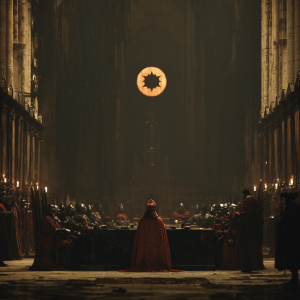
Lasombra believe that authority must be proven. Birth, title, and tradition mean little unless the person holding power possesses the discipline to keep it. This belief makes them effective patrons of ambitious mortals and merciless judges of those they consider weak. A Lasombra might strengthen a struggling leader through hardship, manipulation, and carefully arranged opposition, then destroy that same leader if they fail the test.
The Purpose of Power
Lasombra do not generally regard power as a reward. They consider it a burden that belongs in capable hands. To them, leadership is demonstrated by the ability to make difficult decisions, command loyalty, survive opposition, and accept the consequences of failure.
This philosophy allows Lasombra to describe domination as responsibility. A merchant who cannot defend a trade route should lose it. A priest who cannot hold a congregation together should be replaced. A ruler who cannot control their court has already surrendered the right to govern.
Critics argue that the clan defines competence according to whatever preserves Lasombra influence. Their trials often create the very crises they claim to resolve, and the leaders they strengthen can become dependent upon the clan’s advice, protection, or supernatural authority.
A Lasombra does not merely want obedience. Obedience given without understanding is fragile. The clan prefers followers who believe submission is necessary, wise, or even virtuous.
Organization and Membership
The Lasombra organize themselves through courts, patronage networks, religious circles, military households, merchant alliances, and chains of personal obligation. Their hierarchy is seldom published or openly acknowledged. Influence is demonstrated by who answers a request, which doors open without explanation, and whose career ends after a private conversation.
Clan elders often act as patrons to younger vampires. These relationships resemble noble service, religious discipleship, or political apprenticeship. A younger Lasombra receives access, protection, and instruction but is expected to produce results. Failure is rarely forgiven simply because the task was difficult. Difficulty is the point of the test.
Lasombra sires choose people who have already demonstrated ambition, discipline, courage, or authority. They favor clergy, commanders, judges, diplomats, scholars, merchants, and others accustomed to making decisions that affect many lives. They might also choose someone who survived disgrace, exile, or catastrophic failure and rebuilt their influence through determination.
Newly created Lasombra are often stripped of familiar support. Wealth, position, allies, and reputation may be deliberately threatened or removed. The childe is expected to prove that their strength came from within rather than from circumstances.
Shadow and Absence
Lasombra are closely associated with supernatural darkness. Accounts describe shadows that move independently of their owners, rooms dimming without a change in flame, and darkness gathering into tendrils, barriers, or grasping forms. Some hunters claim the clan does not merely create darkness but draws upon an abyssal force that exists beneath ordinary shadow.
Mirrors are also prominent in stories of the clan. A Lasombra’s reflection may be faint, distorted, delayed, or absent entirely. Polished metal, still water, and certain divination instruments can behave unpredictably around them. For this reason, some Lasombra avoid mirrors, while others display them deliberately as tests of composure or warnings to informed guests.
Their connection to darkness should not be mistaken for a love of disorder. Lasombra darkness is deliberate. It divides spaces, conceals chosen actions, isolates targets, and reminds others that sight is a privilege that can be withdrawn.
Faith and the Lasombra
The Lasombra have a long and complicated relationship with organized religion. Some are sincere believers who regard undeath as a trial, punishment, vocation, or form of divine abandonment. Others view churches as durable institutions through which communities can be guided, disciplined, and controlled.
The clan is especially interested in confession, doctrine, hierarchy, sacred law, and the authority granted to those who interpret divine will. A Lasombra need not corrupt a priest through wealth or threats. It may instead encourage the priest’s certainty, reward their discipline, and provide evidence that increasingly severe measures are necessary.
Lasombra influence is difficult to distinguish from ordinary religious ambition. A severe reformer, calculating bishop, or politically active abbot might be a clan servant, a willing collaborator, or simply a mortal whose methods happen to resemble theirs.
The Church of Lathander condemns vampirism, but its size and complex hierarchy create opportunities for hidden influence. Lasombra agents are most likely to appear where Church authority overlaps with diplomacy, military power, land ownership, judicial authority, or the suppression of heresy.
Relations with Mortals
Lasombra cultivate capable mortal agents. They prefer servants who can act independently, understand institutional systems, and carry out an intention without requiring detailed instruction. Such mortals might be rewarded with patronage, status, wealth, protection, or the removal of rivals.
A Lasombra patron often becomes indispensable gradually. It provides a warning before a political betrayal, arranges a loan when no bank will help, introduces a promising priest to the correct superior, or prevents an investigation from reaching the wrong office. Each service appears reasonable. Each creates another thread of dependency.
The clan has little patience for incompetence. A useful servant who fails honestly may receive another opportunity. One who lies about failure, wastes resources, or becomes publicly embarrassing is more likely to be discarded.
Some Lasombra maintain sincere affection for favored mortal families, congregations, or institutions. This does not make them harmless. They protect what they value through control and may destroy individuals they believe endanger the whole.
Relations with Other Vampire Clans
Lasombra and Ventrue share an interest in leadership, hierarchy, and stable dominion, but they disagree over legitimacy. Ventrue tend to emphasize lineage, inheritance, and recognized authority. Lasombra place greater value upon proven strength and the ability to seize or maintain power. Their alliances are effective and rarely comfortable.
Brujah accuse the Lasombra of placing chains around institutions and calling the result order. Lasombra regard the Brujah as wasteful, allowing anger to destroy structures that could have been captured and redirected.
Tremere are respected for discipline and distrusted for their attempts to make blood itself subject to organized study. Lasombra may work with them when ritual knowledge serves a larger design, but neither clan willingly becomes dependent upon the other.
Nosferatu possess information that Lasombra cannot always obtain through rank or influence. Their dealings are therefore frequent, discreet, and tense. Malkavians frustrate Lasombra plans by revealing truths at inconvenient moments, though their visions can be valuable when interpreted carefully.
Symbols and Traditions
Lasombra symbols often include descending spirals, black suns, empty mirrors, extinguished candles, darkened crowns, veiled eyes, and towers whose shadows are larger than the structures casting them.
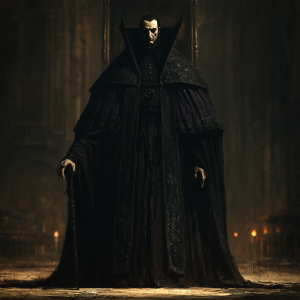
Black, deep violet, silver, and dark crimson commonly appear in their clothing and heraldry. Their agents often wear restrained, high-quality garments rather than obvious uniforms. Authority is shown through cut, material, and confidence rather than decoration.
Common Lasombra teachings include:
- “Power proves its bearer.”
- “A throne is only a chair until others kneel.”
- “Mercy without strength is permission.”
- “The shadow reveals the shape of the light.”
- “Rule what you are willing to answer for.”
- “What cannot endure pressure was never stable.”
Their instructions are often phrased as questions or tests. A Lasombra patron rarely tells a servant that they are being evaluated.
Encounters with the Lasombra
Adventurers are likely to encounter Lasombra influence through noble courts, religious offices, military commands, mercantile councils, charitable institutions, or diplomatic missions. The first representative they meet may be mortal and might not know the identity of the patron they serve.
A Lasombra might employ adventurers to expose an incompetent official, recover damaging correspondence, escort an ambitious cleric, remove a reckless vampire, protect a strategically useful institution, or force two rival leaders into negotiation.
The clan prefers tasks that reveal character. A mission might be structured so that the adventurers must choose between obedience and judgment, public victory and quiet stability, or saving an individual and preserving an institution.
Characters who deal with the Lasombra should consider not only what is being requested but what their response demonstrates. Success may bring patronage. Refusal may earn respect. Thoughtless compliance marks the characters as useful servants rather than potential allies.
GM ONLY: Lasombra Clan
The Truth
The Lasombra are among the strongest supporters of controlled relations between vampire rulers and mortal institutions. They did not create the Concord of Dawn and Dusk alone, but members of the clan helped transform the settlement from a temporary cessation of conflict into a durable system of procedure, silence, and mutual dependence.
Where Ventrue influence helped establish recognized authority, Lasombra influence helped embed that authority within institutions. They encouraged private negotiations, restricted archives, selective enforcement, clerical discretion, and the principle that preserving order could justify withholding truth.
The clan does not regard Strahd as the rightful sovereign of all vampires. Within Barovia, however, most Lasombra accept that he has demonstrated the strength to maintain dominion. They may advise, serve, study, or undermine him, but they do not mistake personal dislike for political weakness.
Some Lasombra believe Strahd has become too isolated and possessive to govern effectively. Others argue that Barovia’s continued survival proves the opposite. Their debate is not whether he is cruel. Cruelty is irrelevant unless it weakens his rule.
Lasombra agents are particularly interested in the Church of Lathander because it offers something Castle Ravenloft cannot easily create: voluntary obedience framed as moral duty.
The Crimson Mercy
The Crimson Mercy operation in Vienna displays recognizable Lasombra methods: charity used to produce dependency, religious language reshaped into obedience, victims marked through controlled rites, and leadership concealed behind mortal intermediaries. Witnesses describe Brother Vilos as a man without a shadow who keeps a silver mirror behind him but never touches it.
For the purposes of the Gazetteer, Crimson Mercy is a Lasombra-sponsored operation connected to Castle Ravenloft through the cult of the Mourning Prince. Its immediate leadership does not represent the entire clan. It is a joint experiment in extending Barovian influence westward through dreams, blood, hunger, and corrupted charity.
Brother Vilos is not a clan elder. He is a blood-bound Lasombra agent who has been altered enough that ordinary food and drink no longer sustain him. His immaculate appearance and soothing manner conceal the fact that he measures every person by how readily desperation can be transformed into devotion.
The operation demonstrates a core Lasombra principle: people who receive life-saving aid will often defend the institution providing it, even when evidence of abuse becomes visible.
Lasombra in Barovia
Lasombra within Barovia rarely maintain independent territorial domains. Strahd does not tolerate rival rulers inside the valley. Instead, clan members and their agents occupy advisory, clerical, diplomatic, and administrative roles.
Their influence can be found in:
- correspondence between Castle Ravenloft and compromised clergy;
- officials who suppress dangerous information in the name of stability;
- charitable institutions that demand obedience in exchange for aid;
- confessors who identify useful fears and private weaknesses;
- noble households whose political decisions repeatedly benefit unseen patrons;
- Church inquiries that stop just before reaching the source of corruption.
The Lasombra are not united in loyalty to Strahd. Some believe his reign represents strength proven over centuries. Others think his obsession with the valley, Tatyana’s reincarnations, and personal vengeance has made him vulnerable to manipulation.
A Lasombra who wants Strahd removed is unlikely to support a popular uprising. The clan would prefer a controlled transition in which institutions remain intact and the successor already depends upon Lasombra guidance.
Goals and Methods
Immediate Goals
Lasombra agents seek to preserve their access to Church offices, noble courts, mercantile councils, and Castle Ravenloft’s diplomatic channels. They identify ambitious mortals, compromise potential investigators, and isolate individuals who might expose the hidden relationship between faith and vampiric power.
Strategic Goals
The clan wants influence over how the Concord is interpreted and enforced. If Strahd’s rule weakens, Lasombra intend to ensure that no new order emerges without their involvement.
Existential Goals
Lasombra seek a world governed by those strong enough to shape institutions and accept the burdens of command. Individual clan members disagree over whether vampires should rule openly, through mortal proxies, or through partnerships with carefully selected human authorities.
Methods
Lasombra methods include:
- political and religious patronage;
- controlled charity;
- confession and blackmail;
- selective protection;
- creation of institutional dependency;
- tests of loyalty and competence;
- manipulation of appointments and succession;
- supernatural darkness and isolation;
- destruction of reputations rather than bodies;
- allowing rivals to fail publicly before offering a solution.
A Lasombra rarely destroys an institution that can be captured. It replaces leaders, alters procedures, changes what information reaches decision-makers, and waits for the institution to call the result reform.
Knowledge of the Lasombra
The following information is cumulative. A character trained by an experienced vampire hunter might know the DC 10 information without a check. Clergy, diplomats, and nobles can recognize Lasombra institutional patterns, but familiarity with power can also make those patterns appear ordinary.
Intelligence (History)
DC 10: Lasombra are a vampire clan associated with shadow, noble courts, religious authority, and political manipulation.
DC 15: The clan has historically favored influence through rulers, generals, clergy, and merchants rather than public territorial rule. Lasombra patrons often test potential servants through adversity.
DC 20: Lasombra have participated in negotiated settlements between vampire courts and mortal governments. Their influence is usually visible in procedures, restricted archives, succession arrangements, and informal offices rather than signed declarations.
DC 25: Fragmentary evidence suggests Lasombra advisors helped shape the institutional practices surrounding the Concord of Dawn and Dusk, particularly the division of public doctrine from restricted enforcement.
Intelligence (Religion)
DC 10: Church teachings warn that vampires can corrupt clergy through promises of authority, certainty, and protection rather than simple temptation.
DC 15: Lasombra are known to study religious hierarchy, confession, heresy investigations, and the ways sacred duty can be used to justify secrecy.
DC 20: Some Lasombra are sincere believers. They may interpret vampirism as divine punishment, a test of worth, or proof that the gods favor strength over innocence.
DC 25: Certain restricted Church records describe vampire advisors who helped clergy preserve religious institutions during periods of open supernatural war. The records condemn the alliances but preserve several procedures created through them.
Intelligence (Arcana)
DC 12: Lasombra can produce or manipulate supernatural darkness that cannot always be dispersed by ordinary light.
DC 16: Their shadows may move independently, deepen without a corresponding light source, or reach beyond their natural boundaries.
DC 20: The clan’s darkness appears connected to an abyssal force rather than conventional illusion or absence of light. It can exert pressure, isolate senses, and take temporary physical form.
DC 25: Certain Lasombra rites use mirrors, blood, and enclosed darkness to observe distant places, conceal supernatural agreements, or create spaces in which ordinary divination fails.
The descending abyssal spiral is associated with Lasombra shadow magic. In established clan sigil-work, it can dim the surrounding area and impair a target’s next attack.
Wisdom (Insight)
When a character negotiates with a suspected Lasombra or senior agent, the GM can call for a Wisdom (Insight) check.
DC 13: The speaker is evaluating competence rather than morality.
DC 17: The apparent request is also a test designed to reveal how the character uses authority.
DC 21: The speaker has identified which institution, relationship, or principle the character depends upon and is preparing to make access to it conditional.
Running the Lasombra
Lasombra should feel controlled, attentive, and comfortable with hierarchy. They do not need to speak softly, but they rarely waste words.
A Lasombra does not threaten a character by describing violence. It explains which allies will stop answering, which doors will close, and which rival will receive the opportunity the character rejected.
When portraying a Lasombra, determine the following:
The Institution. What court, church, guild, household, or military structure carries their influence?
The Trial. What hardship do they believe reveals a person’s true quality?
The Dependency. What service have they made indispensable?
The Failure. What past humiliation or loss still drives their need for control?
Lasombra admire discipline, ambition, strategic patience, composure, and responsibility. They despise wasted authority, public helplessness, sentimental leadership, and people who demand power while avoiding consequence.
They respect opposition when it is organized and purposeful. Defiance without a plan is merely proof that the defiant person is not ready to lead.
Signs of Their Presence
Use the following signs before introducing a Lasombra representative:
- Candle flames diminish when a particular name is spoken.
- A person’s shadow points toward a doorway rather than away from the light.
- Mirrors in an otherwise wealthy household are tarnished, covered, or positioned facing walls.
- Several officials use the same unusual phrase to justify unrelated decisions.
- A charitable institution records obedience, attendance, and confession more carefully than need.
- An ambitious cleric or noble survives repeated scandals that destroy everyone around them.
- A private room contains no windows but has several polished silver surfaces.
- A political appointment is made before anyone publicly learns the office is vacant.
- Records remain complete except for the names of those who authorized important decisions.
- A servant apologizes for failing before anyone has accused them.
Representatives
The Shadowed Prelate
A bishop, abbot, confessor, or senior cleric whose authority has been strengthened by Lasombra patronage. The prelate might be corrupted, blood-bound, sincerely convinced, or unaware of the patron’s true nature.
The Chamberlain
A polished mortal or vampire administrator who controls access to a ruler, institution, or elder. The Chamberlain decides which petitions are heard and which crises reach their patron.
Brother Vilos
The immaculate leader of Crimson Mercy presents himself as a compassionate religious servant. He offers food, shelter, and relief while preparing the desperate for blood rites, dream influence, and obedience to the Mourning Prince.
The Tested Childe
A younger Lasombra whose sire has stripped away wealth, status, and allies. The childe must rebuild influence before being welcomed fully into clan society.
The Castaway
A Lasombra who failed an important test and was abandoned by their patron. The Castaway might seek revenge, redemption, or a new institution to dominate.
The Black Confessor
An advisor who learns secrets through genuine empathy and uses them with surgical precision. The Confessor rarely lies but arranges conversations so that others reveal more than they intended.
Resources and Influence
Lasombra factions might command:
- clergy, confessors, and religious administrators;
- noble patrons and diplomatic households;
- military officers and disciplined retainers;
- charities, hospitals, shelters, and orphanages;
- merchant credit and institutional debt;
- blackmail gathered through confession or correspondence;
- hidden chapels and windowless sanctuaries;
- supernatural darkness and shadow-bound servants;
- influence over appointments, trials, and succession;
- agreements with other vampire courts.
Their influence is limited by rivalry between patrons, dependence upon functioning institutions, the pride of their chosen servants, and their tendency to underestimate people who hold no formal authority.
Lasombra power weakens when ordinary people create systems of mutual aid that cannot be controlled through a single leader or institution.
Complications
The Competent Tyrant
A Lasombra-supported ruler is cruel but effective. Removing them might produce famine, civil conflict, or invasion unless the characters first establish an alternative.
Charity with Conditions
A Lasombra institution provides the only reliable food, medicine, or shelter in a district. Its abuses are real, but closing it immediately harms those most dependent upon it.
The Rival Successor
Two candidates for an important office are being tested by different Lasombra patrons. Each candidate believes the contest is legitimate.
The Sincere Believer
A Lasombra cleric genuinely serves Lathander and opposes Strahd, but believes secrecy, coercion, and controlled sacrifice are necessary to preserve the Church.
The Empty Mirror
A suspected Lasombra appears normally in mirrors. Either the accusation is false, the vampire has concealed its weakness, or another creature is imitating clan methods.
A Controlled Rebellion
A resistance movement receives Lasombra support. Its victories are meant to remove an incompetent official and place a prepared replacement in power, not liberate the population.
Adventure Use
The Black Appointment
A respected Church official dies, but their successor arrives with sealed authority before news of the death leaves the city. The documents are authentic, although no living official admits issuing them.
Crimson Mercy
A charitable mission feeds and shelters hundreds during a period of scarcity. Those who sleep beneath its roof awaken devoted, bloodless, and marked beneath the tongue. Destroying the mission is simple. Replacing what it provides is not.
The Unreflected Ambassador
A diplomat negotiating peace between two kingdoms casts no reflection in the polished table at which the treaty will be signed. Exposing the ambassador might restart the war.
The Trial of Three Failures
A Lasombra patron engineers three crises to test a promising mortal leader. The characters can prevent the disasters, but doing so may convince the patron that the leader cannot succeed without them.
The Confessor’s Archive
A hidden archive contains generations of confessions from nobles, clergy, soldiers, and adventurers. Some reveal crimes. Others record fears and private doubts that were never meant to become weapons.
Development
Lasombra become more cooperative when characters:
- demonstrate competence under pressure;
- accept responsibility for the consequences of their choices;
- preserve a useful institution while removing corrupt leadership;
- recognize hidden chains of authority;
- negotiate from strength without unnecessary display;
- refuse manipulation and offer a workable alternative;
- keep confidential agreements that prevent greater instability.
Lasombra become hostile when characters:
- humiliate their agents publicly without strategic purpose;
- destroy institutions without preparing replacements;
- mistake kindness for weakness;
- expose secrets simply to create disorder;
- demand authority without accepting consequence;
- free dependents without protecting them from the aftermath;
- disrupt carefully prepared succession or diplomacy.
A Lasombra alliance should feel useful before it feels comfortable. The clan solves problems by creating structures that continue operating after the immediate crisis. The danger is that those structures may continue serving the Lasombra long after the characters believe the agreement has ended.
Notes
0 notes on this entry
Sign in to leave a note. Sign in.