The Solomons
“To know is to become responsible.”
The Solomons are the oldest continuous scholarly order in the known world. Neither church nor kingdom, they are a fellowship of philosophers, astronomers, engineers, physicians, jurists, historians, architects, ritualists, and practitioners of both arcane and divine disciplines dedicated to understanding the fundamental principles that govern creation.
Long before universities flourished and centuries before the Church of Lathander established its cathedral schools, the Solomons traveled the world collecting knowledge wherever it could be found. They measured the heavens, catalogued forgotten languages, preserved histories that would otherwise have vanished, investigated relics of civilizations older than memory, and developed systems of inquiry that continue to influence scholarship throughout A’erth.
Their greatest pursuit has never been magical power. It has always been understanding. Although many of history’s greatest wizards, artificers, and sages counted themselves among the Solomons, the Order has never regarded magic as its defining purpose. To a Solomon, spellcasting is merely one expression of the deeper laws that govern the world.
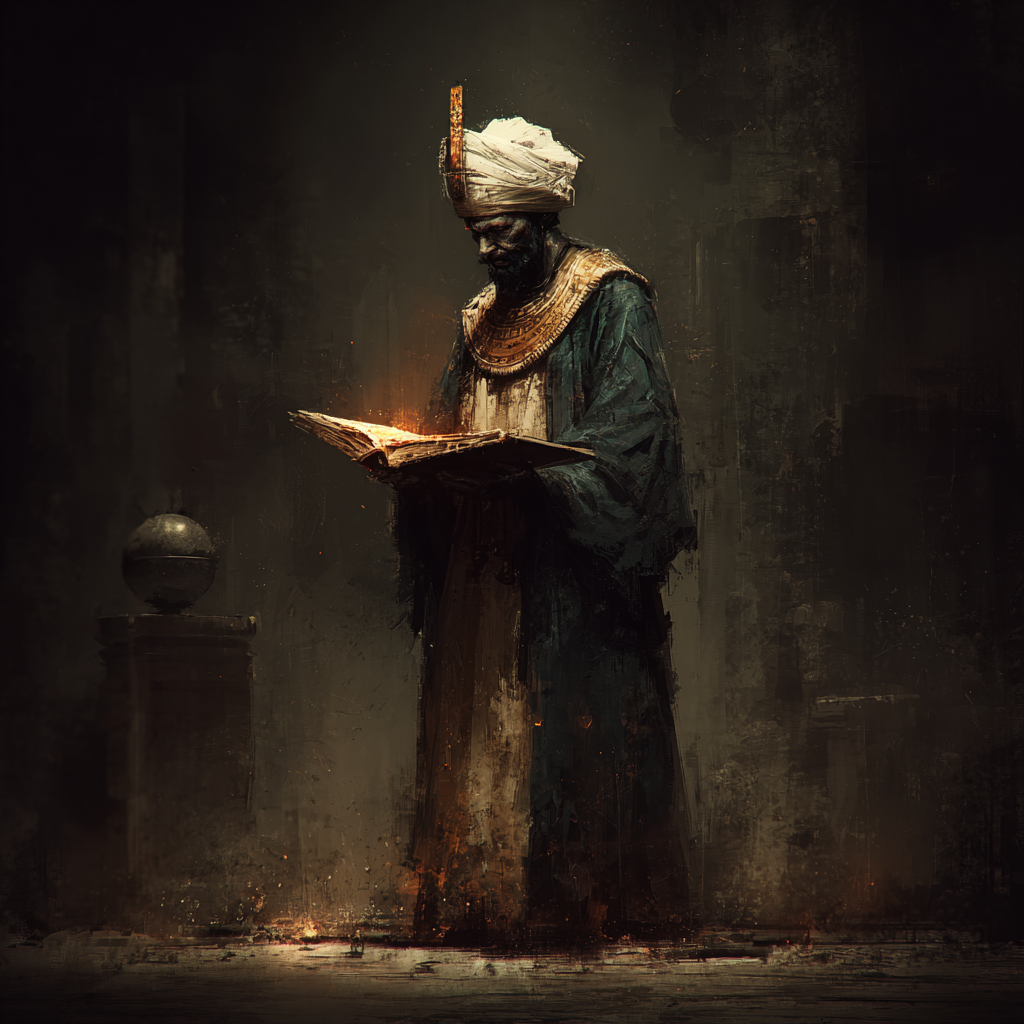
Today the Solomons are respected as scholars by kings, consulted as advisors by rulers, and viewed with equal measures of admiration and caution by nearly every major faith.
History
The precise origins of the Solomons have been lost to history. According to the oldest surviving records, the Order formed during the early Age of Kingdoms, when the first great human civilizations began preserving knowledge beyond the lifetime of individual rulers. Scholars from many lands gathered to collect surviving works of astronomy, engineering, natural philosophy, medicine, ritual practice, and law into a common body of learning. For centuries the Solomons believed themselves to be the architects of this intellectual tradition. Modern scholarship has reached a different conclusion.
Excavations beneath ancient observatories, forgotten temples, and sites such as the Hall of Severance have revealed geometric principles, ritual architecture, and theories of Anima that predate the Order itself. The Solomons increasingly regard themselves not as the creators of this knowledge, but as its inheritors.
The identity of the civilization that first developed these disciplines remains one of the greatest unanswered questions in Solomon scholarship.
Philosophy
The Solomons do not unite around worship. They unite around inquiry. Their central belief is that truth cannot be possessed; it must be continually sought through careful observation, disciplined experimentation, reasoned debate, and the responsible preservation of knowledge. Every discovery carries an obligation. Knowledge without wisdom invites catastrophe. Power without restraint destroys its creator. For this reason the Solomons have long maintained that understanding is inseparable from responsibility. Their debates concern not merely whether something can be accomplished, but whether it should.

The Three Currents
The philosophical traditions of the Order are organized around three complementary schools of thought known collectively as the Three Currents.
Lumina teaches that knowledge should illuminate, heal, and elevate civilization.
Tenebra insists that uncomfortable truths cannot be ignored simply because they are dangerous or unpopular.
Aequitas exists to preserve balance between the other two, ensuring that neither idealism nor ruthless pragmatism overwhelms wisdom.
These are not separate organizations but enduring philosophical traditions that influence every Solomon discipline. Most scholars study within all three during their careers, though many naturally gravitate toward one perspective over the others.
Anima
Among all fields of Solomon scholarship, none has received greater attention than the study of Anima. The Solomons describe Anima as the fundamental life-force woven throughout creation. It is neither exclusively divine nor purely arcane, but the underlying vitality from which both draw their strength.
Rather than existing as fixed “ley lines,” Anima circulates through A’erth in vast, interconnected currents that resemble rivers flowing beneath the surface of the world. These currents branch, merge, deepen, and gradually shift over centuries. Where several currents converge, extraordinary phenomena often emerge: sacred springs, ancient groves, standing stones, and places of profound spiritual significance.
The Church recognizes such locations as holy. The Solomons study them as natural phenomena. Neither interpretation excludes the other.
Harmonic Geometry
The discipline most closely associated with the Solomons is Harmonic Geometry, the study of how Anima flows through living beings, sacred places, celestial cycles, and physical space.
To the untrained observer, its simplest applications appear as Circle Magic. The Solomons reject that description. A ritual circle does not create magical power. It aligns participants with the natural movement of Anima already present within the world. Geometry, architecture, celestial alignment, ritual timing, and the participants themselves all influence how effectively that flow can be directed.
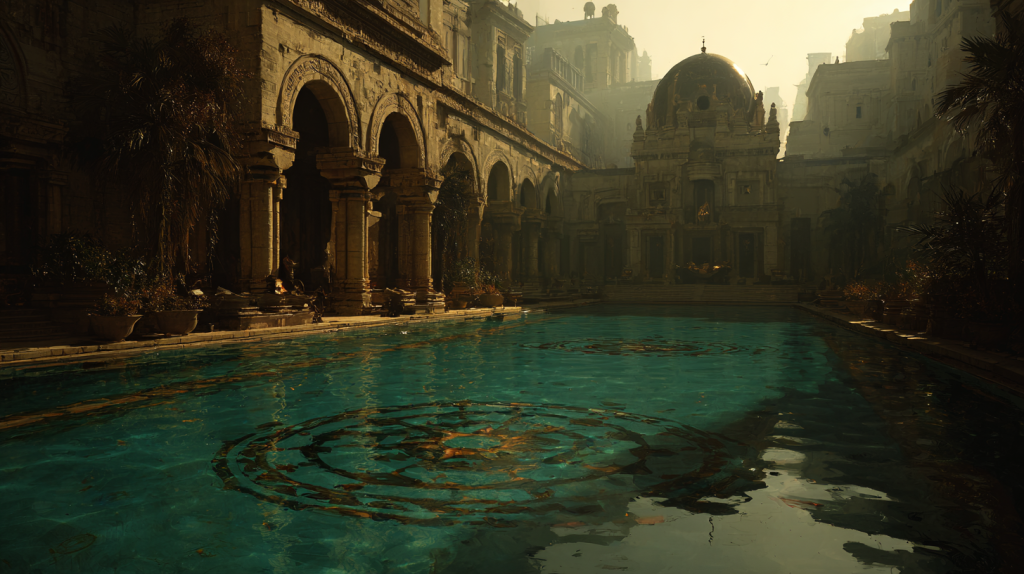
For this reason Solomon scholarship extends far beyond spellcasting. The same principles govern cathedral design, observatories, standing stone circles, bridges, ritual chambers, healing sanctuaries, and ancient monuments whose builders understood the movement of Anima with remarkable precision.
The six techniques commonly practiced by adventurers represent only the most accessible expressions of Harmonic Geometry. The Order’s greatest achievements were never battlefield rituals, but enduring works of architecture and engineering that remained in harmony with A’erth’s living currents for centuries.
The Four Moons
The Solomons have long observed that the four moons exert measurable influence upon the movement of Anima. Rather than creating magical energy, the moons alter the strength, direction, and harmony of the world’s currents in much the same way a moon governs the tides of the sea. This relationship explains why certain rituals succeed only during particular lunar alignments and why ancient observatories were constructed with extraordinary astronomical precision. The Order’s astronomers continue to refine these observations, believing that a complete understanding of celestial harmonics may unlock principles of Anima that have remained hidden since antiquity.
The Concord
The Solomons played a pivotal role in negotiating the Concord of Dawn and Dusk following the Battle of the Ashwain Stones.
Although remembered publicly as a political settlement, the Concord also reflected the Order’s belief that knowledge carries responsibility. Certain discoveries concerning Harmonic Geometry and Severance were judged too dangerous for unrestricted study, leading to agreements that continue to shape relations between the Solomons, the Church of Lathander, and other institutions throughout A’erth.
These decisions remain controversial within the Order itself.
Reputation
To ordinary people, the Solomons are mysterious scholars whose libraries preserve forgotten knowledge. To rulers, they are valued advisors and impartial historians. To engineers, they are masters of proportion and construction. To priests, they are respected colleagues whose methods sometimes seem uncomfortably detached from matters of faith. To their critics, they are intellectuals whose relentless curiosity occasionally leads them toward dangerous discoveries. All of these perceptions contain some measure of truth.
Legacy
Perhaps the Solomons’ greatest achievement is not any single discovery but their willingness to question even their own traditions. Over centuries they have come to recognize that many of their most treasured disciplines—including Harmonic Geometry, aspects of Anima theory, and the principles underlying the Hall of Severance—did not originate with the Order.
They inherited fragments of a civilization whose name has been lost. Their greatest accomplishment may not have been discovering these truths, but preserving them long enough for future generations to ask better questions.
GM Information
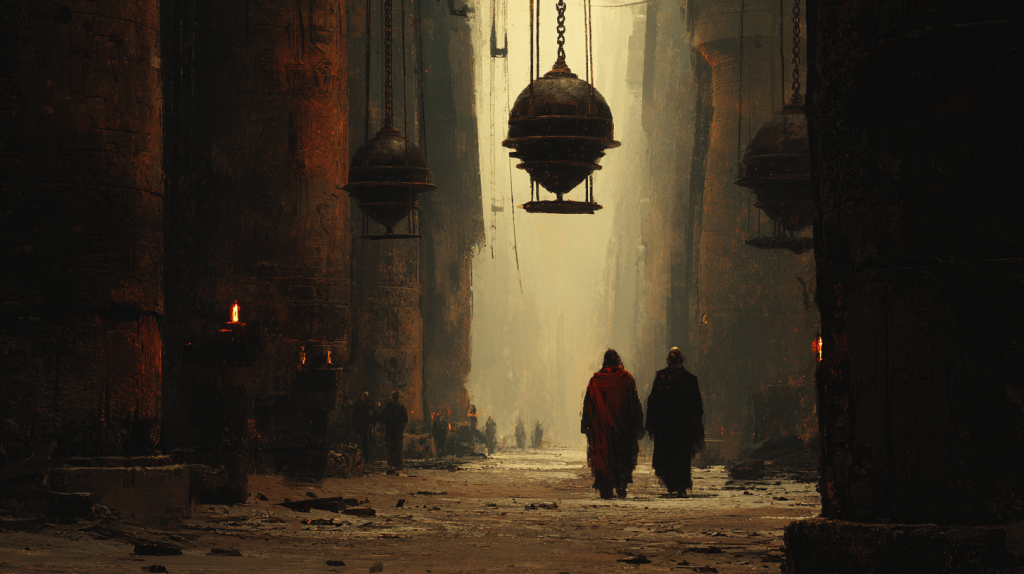
The Solomons present themselves as scholars rather than guardians of ancient mysteries, but this image conceals the true scope of their influence. Their greatest discoveries are not inventions but recoveries. Every major Solomon discipline traces back to fragments of knowledge left behind by an unknown civilization that understood Anima and Harmonic Geometry far more completely than any modern scholar.
The Hall of Severance is one such inheritance. It was not built by the Solomons, nor did they fully understand its purpose when they first studied it. Much of the Order’s history has been shaped by attempts to interpret and reconstruct principles that survive only in incomplete form. Their internal disagreements—represented by Lumina, Tenebra, and Aequitas—are ultimately disagreements over how these fragments should be understood and whether some truths are too dangerous to pursue.
Circle Magic, as represented in the published rules, reflects only the simplest applications of Harmonic Geometry. The six player-facing techniques are introductory practices used by accomplished ritualists, but they represent only a fraction of the discipline. The true achievements of the Solomons are architectural, astronomical, and philosophical. Cathedrals aligned to Anima currents, standing stones positioned to measure the four moons, the Ashwain Stones, and the Hall of Severance are all expressions of the same ancient science.
Throughout Crimson Twilight, the characters should gradually discover that every major mystery—the Concord, the Hall of Severance, the Ashwain Stones, Circle Magic, and even the changing patterns of Anima itself—is connected. The Solomons are not the architects of that mystery. They are its greatest surviving students.
Notes
0 notes on this entry
Sign in to leave a note. Sign in.