Circle Magic (Overview)
“The greatest works of magic are never the triumph of one will over the world, but the harmony of many wills acting as one.”
— Archmaster Theodoric, Solomon of Alexandria
Circle Magic is the disciplined practice of joining multiple practitioners into a single magical working through the principles of Harmonic Geometry. While an individual spellcaster shapes Anima through personal knowledge, faith, or force of will, a circle harmonizes the Anima of many participants until they function as a single magical instrument. The resulting workings are often larger in scale, longer in duration, and more stable than those produced by solitary spellcasters.
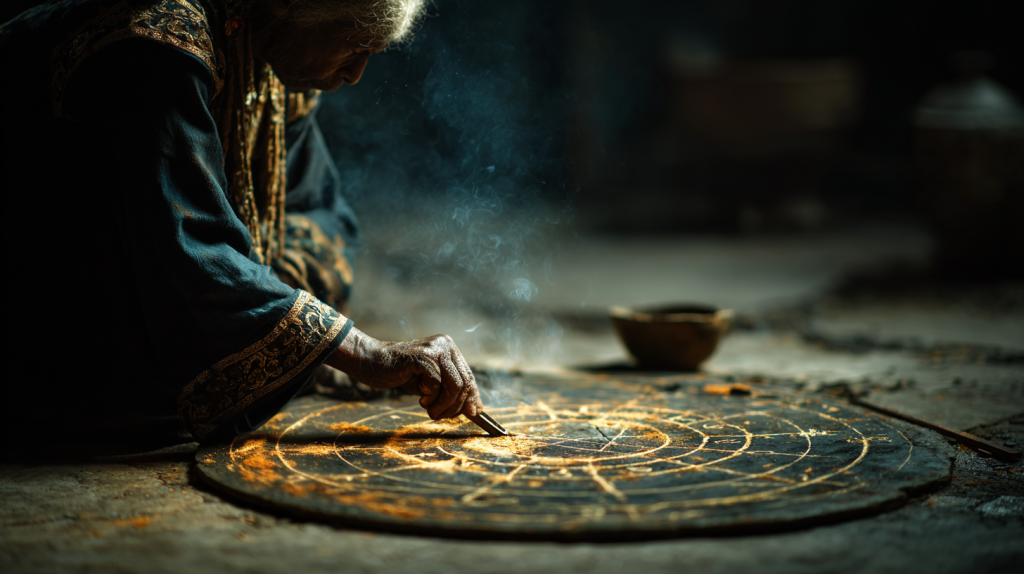
Throughout A’erth, Circle Magic is regarded as one of civilization’s greatest achievements. Cathedrals employ it to consecrate sacred ground and preserve relics. Solomon scholars use it to investigate ancient mysteries and maintain observatories. Dwarven forge circles shape legendary works of stone and steel, while elven conclaves nurture entire forests through seasonal rites. Even among the orc clans of the eastern wilds, shamans gather war circles whose chants strengthen warriors before battle. Though their traditions differ dramatically, each culture recognizes the same underlying truth: Anima is most powerful when brought into harmony rather than dominated.
Origins
The precise origins of Circle Magic have been lost to history. Fragments recovered from the ruins of the First Civilization suggest that the earliest practitioners understood Anima not as an individual resource but as a living current connecting all things. Rather than seeking greater personal power, they developed methods for aligning many minds toward a single purpose. These early traditions eventually became the foundation of what modern scholars call Harmonic Geometry.
Much of this knowledge disappeared during the collapse of the First Civilization. Surviving fragments were preserved, expanded, and systematized by the Solomons, who transformed scattered rituals into a coherent body of magical scholarship. Over the following centuries, their writings spread across A’erth, influencing royal academies, religious orders, and independent magical traditions. Although every culture adapted Circle Magic to its own beliefs, the underlying principles remain remarkably consistent across the world.
Circle Magic and Anima
All magic manipulates Anima, but Circle Magic does so differently than ordinary spellcasting. A solitary caster bends surrounding currents through individual mastery. A circle instead establishes a temporary harmonic field in which multiple practitioners gradually synchronize their Anima until distinctions between individual participants begin to disappear. The Circle Master does not merely command the ritual; they conduct it, guiding every participant into a unified pattern before releasing the completed working.
Because harmony is the true source of a circle’s strength, preparation is as important as magical ability. Participants must share a common purpose, maintain disciplined concentration, and willingly surrender a measure of personal control to the larger pattern. Even the most accomplished spellcasters can weaken a working if pride, fear, or conflicting intentions disrupt the harmony of the group.
This understanding explains why Circle Magic cannot simply be improvised. The greatest workings are measured in minutes, hours, or even days of careful preparation. By the time the final invocation is spoken, the spell itself is only the culmination of a much longer process.
Harmonic Geometry
Circle Magic represents the most visible application of Harmonic Geometry, the scholarly discipline devoted to understanding the structure and behavior of Anima. If Harmonic Geometry is the science, Circle Magic is its greatest practical art.
Students of Harmonic Geometry describe magical workings in terms of balance, resonance, convergence, and harmonic proportion. They believe that every spell, ritual, and enchantment follows underlying geometric relationships that govern how Anima flows through living creatures, sacred places, and the natural world. Circle Magic succeeds because it aligns those relationships instead of forcing them into temporary obedience.
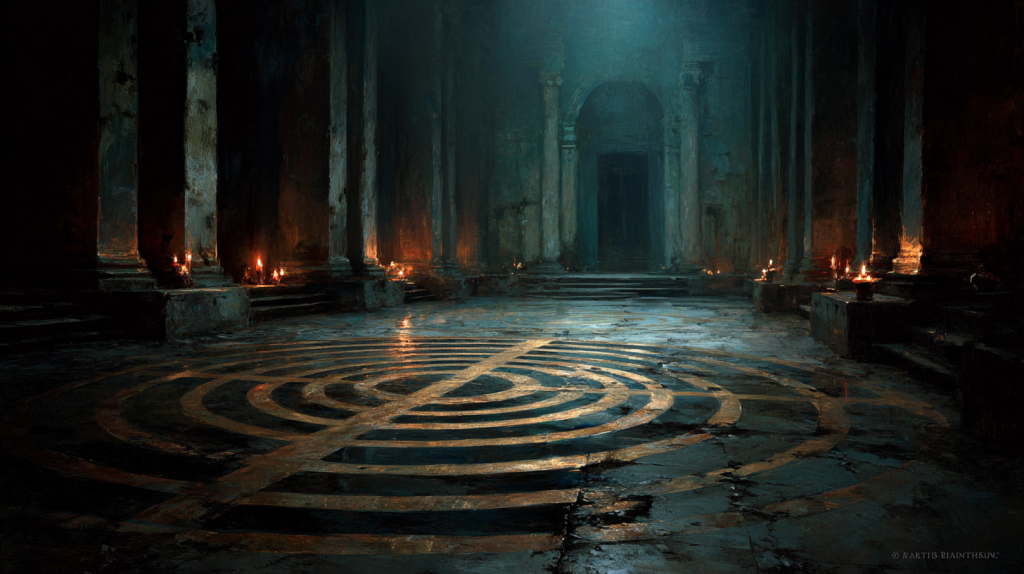
The Solomons remain the foremost authorities on Harmonic Geometry, though the Church of Lathander has incorporated many of its principles into liturgy, cathedral architecture, and sacred ritual. Druids, rune-smiths, and tribal shamans often employ the same principles without recognizing them by scholarly name.
The Six Harmonic Expressions (Circle Magic)
The practicCenturies of observation led the Solomons to organize Circle Magic into six classical methodologies known as the Six Harmonic Expressions. Each Expression represents a distinct philosophy for shaping Anima rather than a separate school of magic. Together they provide the theoretical foundation upon which nearly every known Circle Working has been developed.
Modern practitioners rarely master more than one or two Expressions during their lifetime, while the greatest Circle Masters become renowned for pioneering new applications within a single discipline. Although the Church, the Solomons, and other traditions interpret the Expressions differently, they continue to agree upon the underlying framework.
For a detailed discussion of each philosophy, see The Six Harmonic Expressions.
Circle Magic in the World
Most people encounter Circle Magic not through adventurers but through the institutions that sustain civilization. Rural villages gather each spring while local priests bless fields through communal rites that have changed little over centuries. Cathedral chapters consecrate new sanctuaries, heal plague victims, and preserve relics through carefully prepared liturgies. Solomon observatories spend entire nights maintaining celestial alignments, while royal courts employ Circle Masters to stabilize permanent teleportation circles, reinforce fortress wards, and oversee ambitious works of magical engineering.
Because these workings require preparation, trust, and trained participants, Circle Magic rarely appears as a battlefield tactic. Instead, it shapes the enduring achievements of civilization. Entire cities may owe their defensive wards to forgotten circles of priests. Great bridges, reservoirs, and beacon towers often bear the legacy of long-completed harmonic workings whose creators are remembered only in local histories.
Regional Traditions
Every major culture practices Circle Magic according to its own customs while preserving the same underlying principles of harmony.
Within the Church of Lathander, Circle Magic is inseparable from communal worship. Participants chant liturgical prayers while sacred geometry is traced in chalk, incense, and consecrated oils. The completed working is understood as an act of shared devotion rather than individual achievement.
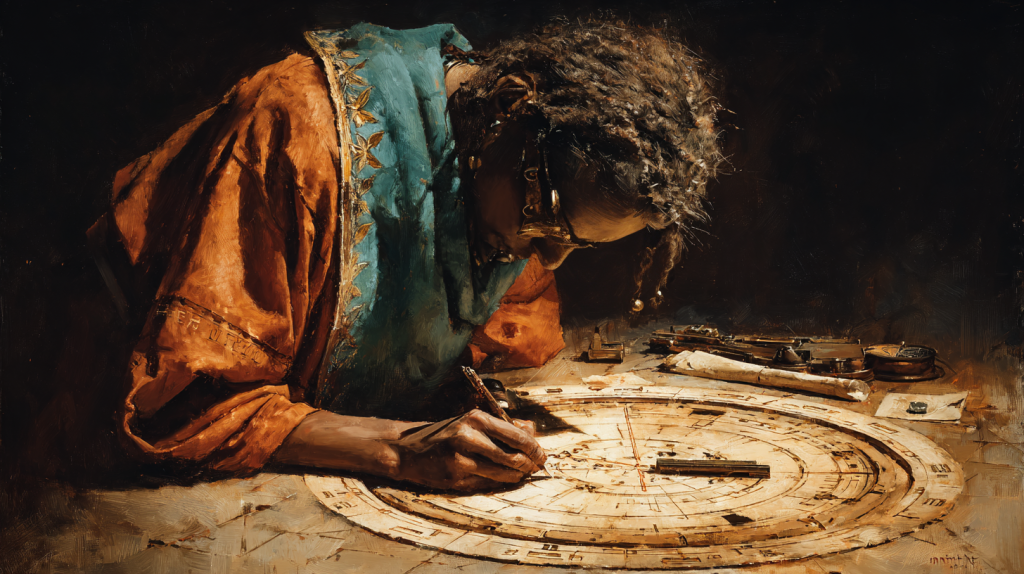
Among the Solomons, circles resemble scholarly observatories. Participants carefully position geometric instruments, astrolabes, and mathematical diagrams before reciting harmonic formulae refined through generations of research. Their ceremonies emphasize precision, observation, and disciplined inquiry.
Elven circles are often performed beneath living canopies where song, seasonal growth, and the surrounding landscape become part of the working itself. Rather than imposing order upon nature, elven practitioners seek to discover the harmony already present within it.
Dwarven forge circles employ carved runestones, rhythmic hammer strikes, and carefully measured patterns of heat and metal. The resulting workings frequently endure for generations, reflecting the dwarven belief that harmony should produce permanence rather than spectacle.
Among the orc clans of the eastern wilds, war circles combine ancestral chants, standing stones, painted sigils, and ceremonial drums. Their rites emphasize unity of purpose, courage, and the shared strength of the clan. Although often dismissed by foreign scholars as primitive, Solomon observers have long recognized that these traditions follow the same harmonic principles found throughout the civilized world.
Legacy
Circle Magic remains one of the few magical traditions practiced across nearly every civilization of A’erth. Kings have risen and fallen, empires have fractured, and religions have divided, yet the fundamental principles of harmonic cooperation have endured. The names, symbols, and ceremonies may differ, but practitioners everywhere continue to discover the same truth: the greatest expressions of Anima are achieved not by overwhelming the world through individual power, but by bringing many hearts and minds into lasting harmony.
Notes
0 notes on this entry
Sign in to leave a note. Sign in.