The Church of the Black Dawn
“Only through darkness is the Light revealed.”
The Church of the Black Dawn is the largest organized religious movement declared heretical by the Church of Lathander. To the faithful of Canterbury, it is known simply as the Black Sun Heresy, a dangerous schism that rejects the orthodox understanding of the Creator’s Light. Its followers reject that name entirely. They believe they alone have preserved the complete revelation entrusted to humanity, while the western Church has become comfortable, politically compromised, and fearful of the truths found beyond civilization’s borders.
Centered deep within the Kingdom of Russia, the Church of the Black Dawn commands monasteries, cathedrals, seminaries, knightly orders, and missionary houses throughout the eastern frontier. Though excommunicated centuries ago, it functions as a complete ecclesiastical institution with its own hierarchy, saints, liturgy, sacred writings, and pontifical succession. In lands beyond the eastern marches, many frontier communities recognize no spiritual authority except that of the Black Dawn.
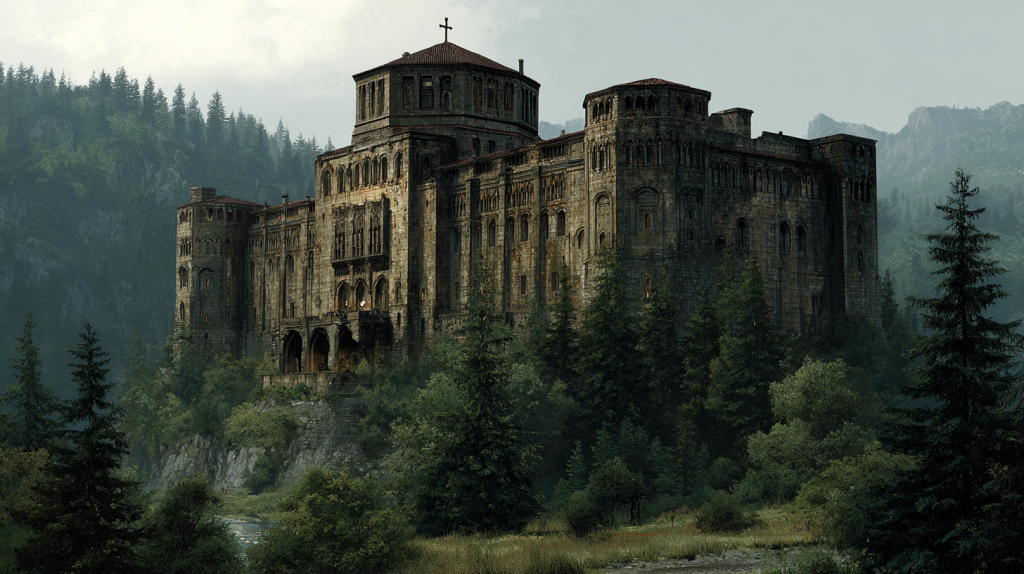
Unlike demon cults or nihilistic sects, the Church of the Black Dawn sincerely venerates Lathander as the Creator and Source of all life. Its great theological divide lies in one belief: creation cannot be understood by embracing only the dawn. Humanity must also understand hardship, darkness, winter, suffering, and transformation. To reject these is, in their view, to reject half of the Creator’s revelation.
History
The origins of the Black Dawn trace to the eastern missionary efforts of the Church several centuries after the Concord of Dawn and Dusk. As missionaries, monks, and knightly orders pushed into the immense forests and frozen frontiers of Russia, they encountered a land unlike the kingdoms of the west.
Human settlements existed alongside ancient orc clans, goblin kingdoms, troll tribes, giants, dragons, and spirits older than recorded history. Civilization survived not by conquering the wilderness but by enduring beside it. Every generation witnessed villages reclaimed by forest, monasteries buried beneath snow, and roads disappearing beneath the relentless march of nature.
Many clergy concluded that hardship itself possessed sacred purpose.
Over generations, eastern theologians began teaching that Umbra was not merely a celestial warning against darkness but an essential expression of the Creator’s design. They argued that suffering stripped away illusion, revealing one’s true nature in the same way an eclipse revealed the hidden majesty of the sun.
Canterbury condemned these teachings as heresy. The eastern clergy answered with excommunication of their own. The resulting schism became known in the west as the Black Sun Heresy. Its followers remember it as the Great Sundering, the moment the western Church abandoned the fullness of the Creator’s revelation.
Theology
The Church of the Black Dawn teaches that creation exists through balance. The dawn cannot exist without night. Strength cannot exist without hardship. Mercy has no meaning without judgment. Hope possesses value only after despair.
Where the Church of Lathander seeks to alleviate suffering wherever possible, the Black Dawn teaches that suffering often serves as the Creator’s greatest teacher. Hardship reveals character, strips away vanity, and transforms the faithful into stronger servants of the Light. Its theologians frequently ask:
“If the Creator wished only the dawn, why was the night also created?”
This philosophy does not celebrate evil. Rather, it teaches that fear of darkness weakens civilization. The faithful therefore seek not to destroy darkness but to master it.
Umbra and the Black Sun
No symbol better represents the Church than the Black Sun. To outsiders it appears to be an eclipse. To the faithful it represents revelation. During an eclipse the sun is not destroyed. It is unveiled.
The Church teaches that Umbra is the moon through which illusion dies. Beneath its light, pride falls away, weakness is exposed, and truth remains. The Black Sun therefore represents the moment when false certainty disappears and only genuine faith survives.
The Church recognizes all four moons as works of the Creator but teaches that Umbra has been gravely misunderstood by the western Church. It is neither evil nor cursed. It is the divine instrument of transformation.
Organization
The Church mirrors the structure of the western Church while claiming to preserve its original form. Its supreme spiritual leader is:
His Holiness Mikhail III, Dawnlord Umbrae, Pontiff of the Black Dawn, First Shepherd of the True Church, Successor of the Unveiled Sun, Keeper of the Eternal Eclipse, Warden of the Eastern Marches, Lord of the Iron Forest, Speaker Before the Clans, the Unbowed, and Bearer of the Iron Oath.
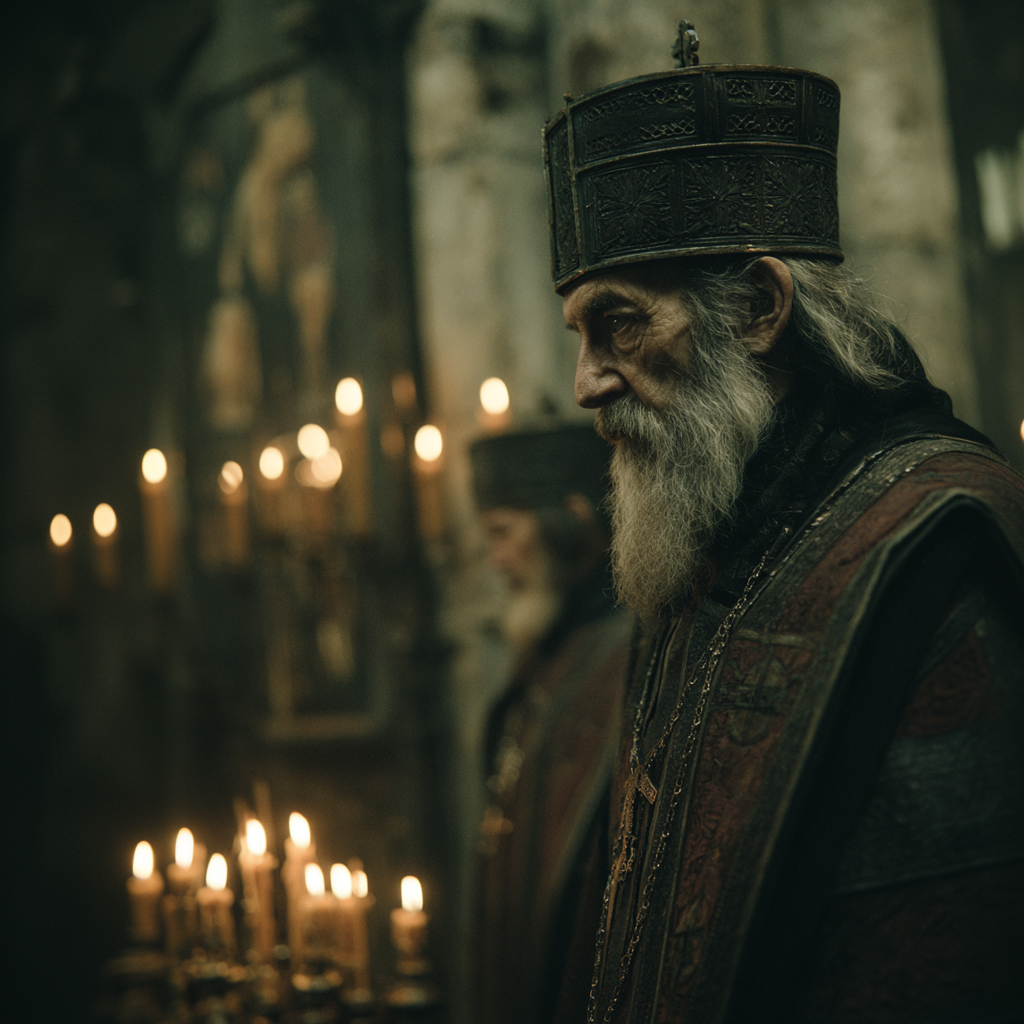
To the faithful, Mikhail III is not an antipope. He is the rightful successor to the first Dawnlords. The Church of Canterbury is regarded as the schismatic institution. Beneath the Pontiff stand patriarchs, bishops, abbots, and missionary prelates who govern vast territories across Russia and the eastern frontier. Many monasteries serve simultaneously as churches, fortresses, schools, and centers of diplomacy between humanity and the elder peoples of the Wild Lands.
The Wild Lands
Unlike the kingdoms of western Europe, Russia never fully displaced the ancient peoples. Orc nations. Goblin kingdoms. Troll tribes. Giants. Ancient dragons. Fey courts. Primeval spirits.
The Church of the Black Dawn considers these peoples part of the Creator’s design rather than obstacles to civilization. It teaches that strength deserves respect regardless of race and that wisdom may be found among any people willing to honor sacred oaths. This philosophy has earned the Church uneasy alliances with several orc clans and frontier kingdoms.
Its Pontiff bears the title Speaker Before the Clans, recognizing that his authority has been acknowledged by leaders beyond humanity.
The Orders of the Black Dawn
Like the western Church, the Black Dawn possesses numerous religious orders. Two are infamous throughout A’erth.
Order of the Black Sun
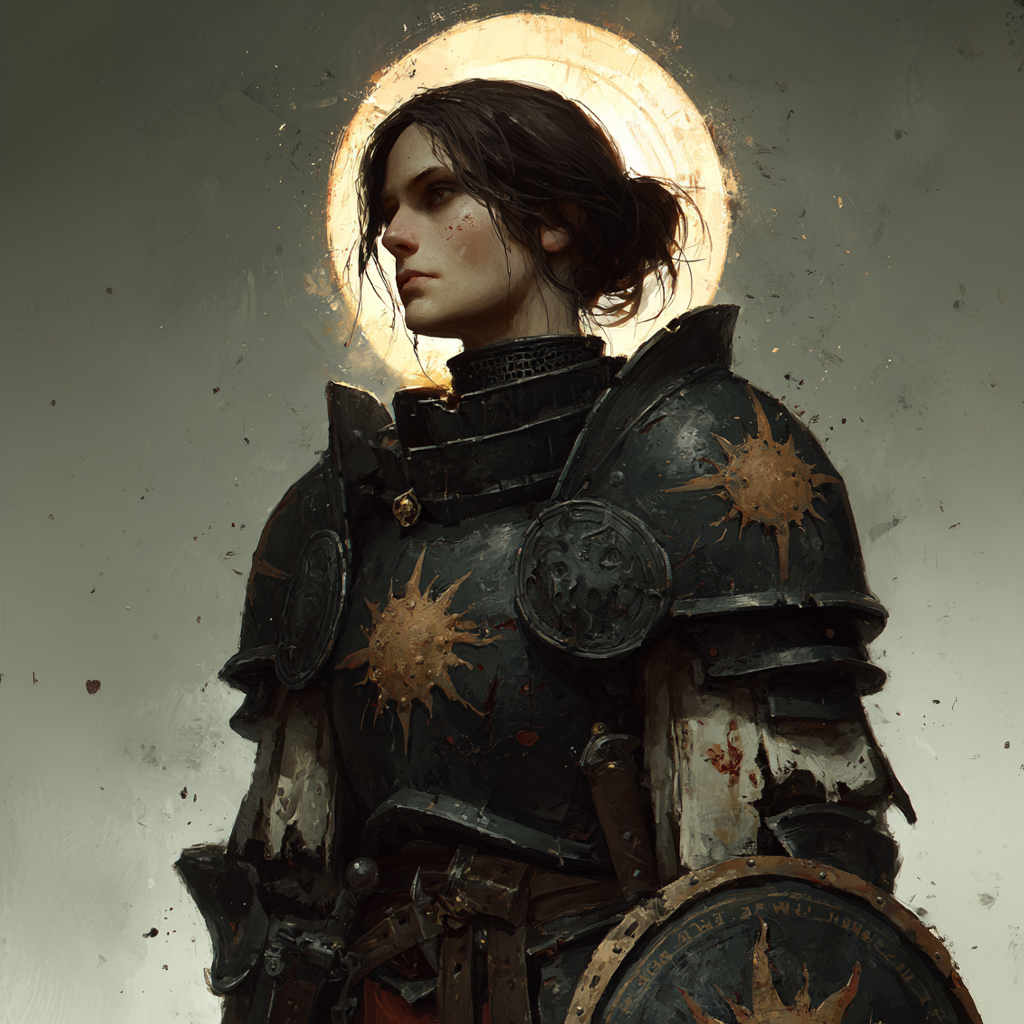
The militant arm of the Church. Its knights defend frontier settlements, wage war against monstrous threats, and pursue strength through relentless discipline. Some chapters openly embrace lycanthropy as a sacred transformation, believing the beast reveals aspects of the Creator deliberately hidden from ordinary humanity. These practices remain controversial even within the Black Dawn itself.
Order of the Crimson Dawn
The hidden hand of the Church. Its members serve as diplomats, scholars, spies, and missionaries throughout foreign kingdoms. They infiltrate institutions, cultivate allies, recover ancient knowledge, and quietly expand the influence of the Black Dawn. While rumors claim they cooperate with vampires and other creatures of darkness when necessity demands, Church authorities neither confirm nor deny such accusations.
Relations with the Church of Lathander
The two Churches remain locked in one of the oldest religious disputes in the known world. Each recognizes the other as apostate. Each claims legitimate succession. Each possesses ancient relics. Each canonizes its own saints. Each prays to the same Creator. To many ordinary believers, the theological differences seem subtle. To the clergy of both Churches, they define the future of civilization itself. The Church of Lathander believes the Creator calls humanity to overcome darkness through hope, mercy, and renewal.
The Church of the Black Dawn teaches that humanity must first endure darkness before it can truly understand the Light. Both proclaim themselves the True Church.
Only history will judge which, if either, has understood the Creator’s design.
Sacred Aesthetics
At First Glance
Black basalt walls rise beneath immense pine beams darkened by centuries of smoke. Hundreds of white beeswax candles burn before iron icons, their light reflected in polished obsidian floors. Narrow windows admit only thin shafts of cold daylight that cross the sanctuary like spears of gold. The air carries the scent of juniper, cedar, and pine resin while monks chant in deep, resonant voices that echo like the wind through an ancient winter forest.
Color Palette
Black basalt, dark granite, weathered oak, wrought iron, crimson, charcoal, silver-gray, white beeswax, and polished obsidian.
Sacred Symbolism
The Black Sun, an eclipsed solar disk surrounded by a brilliant golden corona, represents revelation through trial. Iron circles, eclipses, mountain peaks, wolves, evergreen branches, and the four moons appear throughout sacred art. Every symbol reflects endurance rather than comfort.
Architecture
Churches resemble fortified monasteries built to withstand generations of winter. Thick stone walls, towering timber roofs, bronze-bound doors, and narrow windows create interiors of solemn strength. Architecture directs a single beam of morning sunlight onto the altar, symbolizing truth piercing darkness.
Sacred Art
Icons portray saints weathered by hardship rather than untouched by it. They stand in snowstorms, beside wolves, on lonely mountain passes, or defending isolated monasteries. Their faces bear scars, their clothing is worn, and their eyes reveal unwavering resolve.
Vestments
Priests wear black wool cassocks beneath dark gray cloaks fastened with iron clasps. Bishops favor crimson-lined vestments edged in dark silver thread. Knightly Orders wear blackened steel, heavy mail, fur mantles, and crimson surcoats embroidered with the Black Sun.
Sacred Objects
Iron reliquaries, rough-hewn wooden altars, obsidian chalices, meteoric iron crosses, white beeswax candles, carved antlers, amber prayer beads, and great bronze bells weathered by northern winds.
Ritual Atmosphere
Services are deliberate and contemplative. Long periods of silence separate spoken prayers, allowing worshippers to confront themselves before the Creator. Chant replaces elaborate hymns, while flickering candlelight transforms the sanctuary into a place of quiet endurance rather than celebration.
Music & Chant
Deep male and female choruses sing slow harmonic chants accompanied by low horns, frame drums, and resonant bells. The music resembles the rhythm of marching through snow or the steady beating of a determined heart.
Incense & Fragrance
Juniper, pine resin, cedar, birch smoke, spruce needles, cold stone, and winter herbs.
Sacred Animals & Plants
Wolf, raven, bear, elk, evergreen pine, spruce, fir, juniper, mountain ash, and white moss.
Common Blessings
“Stand until the Dawn.”
“May your oath outlive the winter.”
“Walk unbowed beneath the Black Sun.”
“The Light reveals those who endure.”
Notes
0 notes on this entry
Sign in to leave a note. Sign in.