Legendary (Tiered) Items
Most magic in A’Erth arrives finished. A blade is a blade; a ring is a ring; a scroll burns to ash after one use. Tiered items are the exception — objects that keep their own counsel and reveal themselves in stages as the bearer grows worthy, useful, or simply enduring enough to see them through. They are not upgraded by artisans. They wake.
A tiered item is written into the world with three faces. The first is the one anyone can pick up; the second and third are hidden inside the first, waiting for the bearer to become the person the item was made for. When conditions align — sometimes a threshold of experience, sometimes a deed done again and again, sometimes a story beat, sometimes all three at once — the item advances. The advancement holds for as long as the bond between item and bearer holds. What happens when that bond ends is another matter, described below.
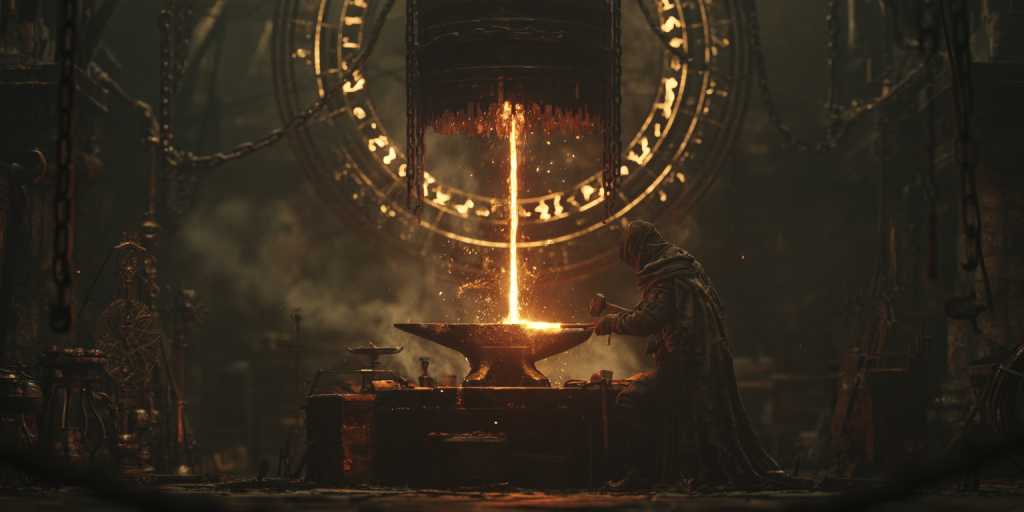
This entry describes the pattern, its mechanics at the table, and a handful of examples drawn from A’Erth’s own histories, most with roots in older stories the players may already know.
The Three Tiers
The three faces are named after their own bearing on the world.
Dormant is the item at rest. It functions — usually as a solid uncommon or rare magic item with one or two properties — but its deeper geometry is asleep. A Dormant item is dangerous to no one, useful to its keeper, and easy to underestimate. Most tiered items pass their entire history in the Dormant state; only a small fraction ever wake.
Awakened is the item come to itself. The properties that were dormant now respond, sometimes with subtle new capabilities and sometimes with dramatic ones. An Awakened item recognizes its bearer as its bearer, and its bearer usually recognizes the item as more than a possession. Rarity climbs by one step.
Exalted is the item in full song. Every property the item was ever meant to carry is present at once. The item has become what its maker intended it to become. Exalted items are rare across A’Erth — measured in dozens or fewer at any given moment — and they tend to attract notice, sometimes desirable, often not.
For level-triggered items (see below), the tier bands map to the recognized adventurer capability bands:
| Party (or covenant) average level | Tier |
|---|---|
| 5–10 | Dormant |
| 11–16 | Awakened |
| 17+ | Exalted |
Not every tiered item uses level as its trigger. Deed-triggered and story-triggered items pay no attention to the party’s level at all — a low-level bearer of a deed-triggered item can hold an Exalted version if they have done the deeds. Those items are correspondingly hazardous: an Exalted item in the hands of a level-4 party changes what the party can do, and what it will attract.
For covenant items — those bound to more than one bearer at once, sharing tier and awakening across the whole covenant — “party average” is measured across the covenant, not the wider party.
How advancement works
Each tiered item is written with its own advancement trigger — the thing that has to happen before the item wakes. Different items use different triggers, and the more layered items use more than one. The trigger is not decoration; it is what the item is about, expressed as a condition.
Common trigger shapes:
- Level milestone. The party (or covenant) crosses a level threshold; the item wakes on the long rest that follows. The simplest trigger, and the one most Church-recognized covenants use.
- Deed threshold. The item counts a specific kind of action and wakes when the count crosses a threshold. Deeds are always chosen, not accidental: allies saved from death, truths recorded, spirits properly named, miles walked with a stranger.
- Story beat. The item wakes when a specific narrative event occurs — a return to the place it was forged, the death of a named figure, a vision witnessed under a specific moon. Hardest to write, most memorable when it fires.
- Ritual of awakening. The item wakes when the bearer performs a formal rite at a specific place, time, or celestial alignment. Rituals of awakening usually require witnesses and rarely can be repeated or forced.
- Sacrifice. The item wakes when the bearer gives something specific up — a name, a memory, a magical possession, a relationship. The item does not describe the sacrifice in advance; the bearer discovers what was taken only afterwards.
- Combined triggers. The most powerful tiered items require more than one condition. A great weapon might advance to Awakened at level 11 and after being carried in a losing battle; to Exalted at level 17 and after the bearer has been ordained by a full Order. Combined triggers make an item feel earned rather than reached.
The DM writes the trigger into the item’s private notes when the item enters play; the bearer is told the tier they currently hold but not the condition for the next one. Bearers who suspect the pattern may guess correctly — some items reward the guessing — but the DM never confirms until the item itself does.
Whatever the trigger, three things hold across every tiered item:
Advancement is shared. If the item is bound to more than one bearer, they all experience the awakening together, wherever they are. This is a mercy — the item does not pick favorites — and a warning, because whatever draws attention to an awakened item draws it to every bearer at once.
Advancement holds only while the bond holds. Within a bearer’s tenure the item does not backslide — even in an eclipse, even in profaned ground, even when the bearer is dying — and it does not degrade. When the tenure ends (death, willing surrender, betrayal, whatever the item’s release condition names), most tiered items revert to Dormant in the next bearer’s hands and must be reawakened afresh; the awakening was bound to that bearer, not to the item alone. A minority instead vanish rather than accept a new bearer at all — they slip out of the world entirely, to be found in another land or another age, sometimes years later, sometimes generations, sometimes never. Only a rare few carry their awakening forward to a new bearer; when they do, the transfer itself is a story the bards keep.
Advancement cannot be forced. There is no ritual to hurry a level-triggered item; there is no shortcut to a deed count. Items that ask for specific deeds refuse to accept faked ones — a shield asked to protect only measures the moments its bearer risked something real; a ledger asked to record truth spills its ink on lies. Bearers who try to game the trigger discover very quickly that the item has been watching them the whole time.
What makes an item a tiered item
Not every magic item earns the pattern. Tiered items suit objects that are, at their heart, about becoming: a covenant remembered across generations, a weapon passed hand to hand as its wielders die around it, a book that fills as it is read, a shield whose defenders have all fallen. Items with narrative gravity — things a bard would sing about, things a family would burn a chapel to protect.
Items that stay ordinary include: potions, single-target consumables, focused combat gear (a +1 sword, a hat of disguise), and most alchemical devices. These serve their purpose and are done.
Common design shapes
Certain patterns recur across the tiered items now recorded in A’Erth’s Gazetteer.
Scaling defensive bonus. Many tiered items grant +1 to some category of saving throw or check at Dormant, +2 at Awakened, +3 at Exalted. The bonus is always associated with what the item is about — a covenant item scales all saves; a scholar’s item scales knowledge checks; a defender’s item scales the bearer’s ability to shield others.
Feature expansion. Features present at Dormant often gain range, duration, or utility as the item wakes. A telepathic word that carries a mile at Dormant carries any distance on the same plane at Awakened. A shielded ally at Dormant may become two shielded allies at Exalted.
New properties unlocked at higher tiers. Some abilities never appear at Dormant. Covenant items in particular reserve their most dramatic effects — mass teleportation, planar witnessing, the summoning of all bearers to a single point — for Awakened or Exalted alone.
Charge pool that scales. A common implementation gives each bearer a per-rest charge pool that grows with the item’s tier. The pool feeds the item’s most-used features. Some features cost no charge at any tier (passive senses, saves), and some features live outside the pool entirely (per-item, per-week uses).
Individual vs. shared usage. Covenant items introduce a distinction between features every bearer has independently (each has their own charges) and features the item as a whole may only do once per rest cycle or week — a mass summoning, a council of all bearers, a plane-wide call. Both must be tracked; only the first fits neatly onto a character sheet.
At the Table
Tiered items are tracked in D&D Beyond as three separate homebrew items — one per tier — swapped in as the bearer meets each trigger. Each item carries the tier’s saving-throw modifier, its charge pool (with a short-rest or long-rest reset condition), and the tier-appropriate feature descriptions. Where a feature is chargeable, it is also attached to the item as a homebrew Spell, so casters see it as a labeled cast button on their sheet that automatically debits the pool when clicked.
Non-caster bearers see the charge pool but not the buttons; DDB’s spell-attachment mechanism does not extend to Barbarian, Fighter, Monk, or Rogue characters. This is a platform limitation, not a design choice. In practice most bearers of the currently known tiered items are casters, so the split UX is livable.
Shared-per-item features cannot ride on the character sheet’s charge tracker (that tracker belongs to the individual bearer). These are tracked at the table: a whiteboard column, a shared Discord message, a handout pinned to the DM’s binder. This is a feature, not a bug; a mass summoning that convenes lightly is one that carries no weight.
For deed- and story-triggered items, the DM tracks the trigger privately — a simple tally in the campaign notes is enough. The bearer is not told the count.
When a bearer’s tenure ends and an item is not carrying its awakening forward, the DM removes the current-tier item from the character sheet and returns the Dormant version to inventory for the next bearer. Vanishing items are removed entirely — where and when they surface again is the DM’s next hook.
Familiar Examples
The tiered pattern predates A’Erth. Bards will tell you the following weapons follow it — in different traditions, to different degrees, and by different names — worthiness triggers, reforging rituals, deeds counted, awakenings inherited or lost when a bearer falls. A DM building a new tiered item can point at any of these and ask what would this look like Dormant? The answer is usually where the item’s own story starts.
European legend and Arthurian tradition.
- Excalibur / Caliburn — sword drawn from stone by the rightful king; returned to the Lake when the bearer dies. Worthiness trigger; vanishes on bond’s end.
- Durandal — Roland’s sword, said to hold three saintly relics in the pommel; refused to break under Roland’s own hand at Roncesvalles. Bond-end behavior: hidden by the bearer rather than surrendered.
- Joyeuse — Charlemagne’s coronation sword, preserved to this day in the Louvre. A real royal blade whose story is the “hero-sword” pattern in miniature — heirloom-scale, awakens in the crowned bearer’s presence.
- Dyrnwyn — one of the Thirteen Treasures of the Isle of Britain; flames when drawn by a worthy hand and will not burn for the unworthy. Worthiness-triggered, ritual-shaped.
- Fragarach, the Answerer — Manannán mac Lir’s sword; the touch of it compels truth from anyone it touches. Deed-shaped — wakes for a bearer who has demanded and received truth many times.
Norse and Germanic.
- Gram / Balmung — Sigmund’s shattered sword, reforged by Regin for Sigurd, who used it to slay Fafnir. The reforging is what earns the item its most famous property. (Root of the Sundered Blade of Argynvostholt, below.)
- Tyrfing — a cursed sword that must draw blood every time it is drawn; brings ruin to three of its wielders in turn. The alternate model — awakening as burden, not gift.
- Gungnir — Odin’s spear, sworn to strike true and to bind an oath; a spear whose awakening is bound to what the bearer promises.
Hagiography and relic tradition.
- Ascalon — Saint George’s dragon-slaying spear. Story-beat trigger: wakes at the moment the dragon is found. A martial cousin to the Lance of Saint Ignacious.
- The Sword of Saint Peter — a curved-edged sword said to be the one Peter drew in Gethsemane; a real relic preserved in Poznań. An item whose whole tiered story rides on the bearer’s willingness to sheathe it.
- The Holy Lance — the god-slaying spear held in Vienna’s Hofburg treasury; the direct real-world echo of the Lance of Saint Ignacious below.
Fantasy.
- Andúril, formerly Narsil — broken sword reforged for the returning king in Tolkien’s account; ritual-of-awakening trigger, awakening carried forward through the bearer’s line.
- Stormbringer — Elric’s soul-drinking blade; awakens by feeding, and takes something from every bearer it wakes for. The model for tiered items whose awakening is a debt.
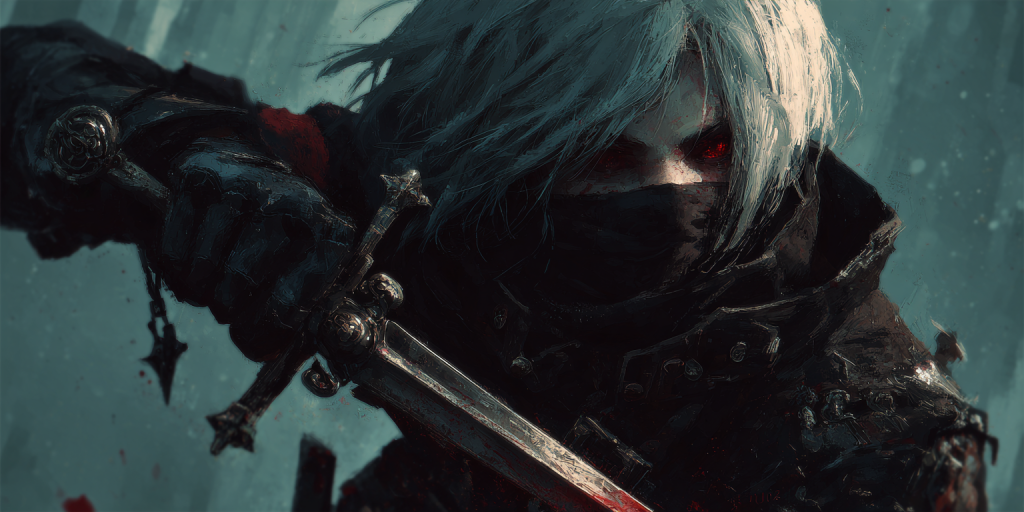
Not every weapon on this list is a tiered item in its original telling — some are merely powerful. The point is the shape: worthy bearer, ritual, reforging, deeds counted, awakening bound to the bearer’s own story. Tiered items make that shape explicit at the table.
Sample Tiered Items
The following are known or rumored in A’Erth as of the current Gazetteer revision. Each carries a real-world root the players may recognize; each has been reworked to fit the setting. Some are canonical; some are hooks a DM may draw on or set aside.
The Lance of Saint Ignacious
Rooted in the Holy Lance / Spear of Longinus — the god-slaying spear held in Vienna’s Hofburg treasury, said in the oldest accounts to have pierced the side of a martyred god at the moment of his death. In A’Erth, the Church of Lathander teaches that this same spear pierced the Morning Lord’s Avatar at his descent, and that it was later present at the martyrdom of Saint Ignacious on the fields where the Church would come to be. Both bloods marked it. Both remain.
A short spear tipped with a corroded iron leaf-blade, its haft wrapped in strips of vellum cut from Saint Ignacious’s funerary shroud. The Church of Lathander recognizes it as a first-class relic — of the martyr’s own blood — and disputes with the Radiant Ecclesia over which cathedral rightly holds it. It has been moved four times in the last century, always in secret, always to be closer to what its keepers believe is a rising need.
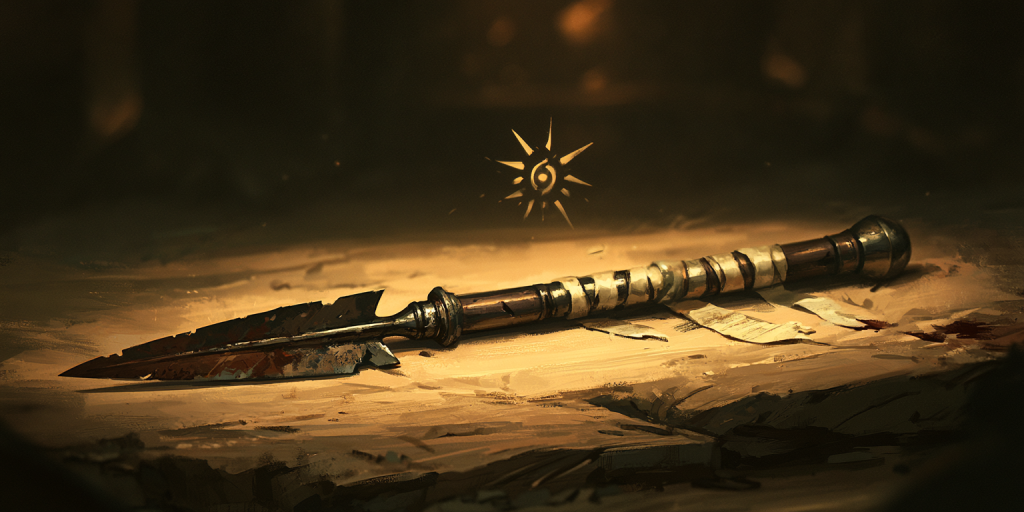
Dormant (Rare). +1 spear. Radiant damage instead of piercing when the wielder chooses. Once per short rest, on hitting an undead creature, the target takes an additional 2d8 radiant damage.
Awakened (Very Rare). +2 spear. Radiant option retained; radiant damage from the spear ignores resistance. Once per long rest, the wielder may cast Beacon of Hope by pressing the vellum wrappings against their brow. Once per day, the wielder may cast Zone of Truth (save DC 15) by extending the spear toward the intended zone.
Exalted (Legendary). +3 spear. All Awakened properties retained (Zone of Truth save DC 16). Grants Detect Lies as a constant passive: while attuned and holding the Lance in one hand, the wielder knows when any creature within 30 ft that they can see and hear speaks a deliberate lie. They do not learn what the truth is — only that the statement was untrue by the speaker’s own knowledge. The effect is always on and cannot be suppressed. Also grants the Command the Choir property (1/week): plant the spear in unconsecrated ground; the ground becomes hallowed to a 60-ft radius for 24 hours; undead within radius have disadvantage on saves against the wielder’s radiant damage. The Choir is heard by every faithful ear within a mile, whether they know why.
Trigger. Combined — story beat and level. The Lance advances to Awakened only after the bearer has personally witnessed a martyrdom (party average level 11+); to Exalted only after the bearer has personally survived a martyrdom intended for them (party average level 17+). Both awakenings require the presence of the vellum wrappings; both leave the bearer changed in ways the Church quietly documents.
On bond’s end. Reverts to Dormant when the bearer dies unmartyred or willingly surrenders the Lance; the Church expects this and receives it back to a reliquary. If the bearer dies a martyr, the Lance instead vanishes — usually reappearing at the site of the next martyrdom the Church did not see coming.
The Sundered Blade of Argynvostholt
Rooted in the Norse hero-sword Gram (also called Balmung), reforged from the shards Sigmund left behind for his son Sigurd — the sword by which Sigurd slew the dragon Fafnir. The pattern of a great blade broken, its fragments recovered, and its bearer reforging it for a purpose no one else can carry is one of the oldest tier-shapes in myth.
A longsword whose blade is a lattice of moonstone-quenched iron shards fused around a spine of undamaged steel. The shards were recovered from the ruined halls of Argynvostholt — where the master-blade of the last Knight-Marshal shattered against a foe the Order could not name.
Dormant (Rare). +1 longsword. On a critical hit, additional 2d6 damage of the bearer’s chosen type: force, radiant, or necrotic.
Awakened (Very Rare). +2 longsword. The critical-hit bonus becomes 3d6. Once per long rest, the bearer may add the sword’s damage die once more to a missed attack, retroactively turning a miss into a hit that deals damage (but not effects).
Exalted (Legendary). +3 longsword. Grants the Standing Word property (1/week): as an action on a battlefield the bearer expects to lose, plant the sword in the ground; allies within 60 ft cannot be reduced below 1 hit point for one minute. The sword must be picked up again by the bearer at the end of the minute or the effect ends.
Trigger. Deed threshold — losses carried. The Sundered Blade wakes at losing battles: the bearer must have carried it into an encounter that ended in loss (allies dropped, escape required, mission failed) — three times (Awakened) and seven times (Exalted). It does not wake for feigned defeats or tactical withdrawals; the loss must have hurt.
On bond’s end. Reverts to Dormant. The Sundered Blade has been reforged more than once, and every bearer counts their own losses — the sword remembers none of the previous ones. When it passes hand to hand it goes quiet again, waiting for whoever picks it up to lose enough to wake it.
Solomon’s Signet
Rooted in the historical and Judeo-Islamic Seal of Solomon — the ring by which King Solomon commanded spirits, sealed demons in brass vessels, spoke with the birds of the air. Solomonic manuscripts are already part of A’Erth’s magical tradition; the signet is what those manuscripts refer to when they speak of the ring.
A brass ring set with a single hexagonal chalcedony bearing an incised six-pointed star. Its provenance is contested — Vienna scholars trace it through five owners named in Solomonic manuscripts, and the Cathedral of First Light disputes each attribution. The most honest answer is that no one alive knows if this is the signet or a signet. Both possibilities are inconvenient for the people holding it.
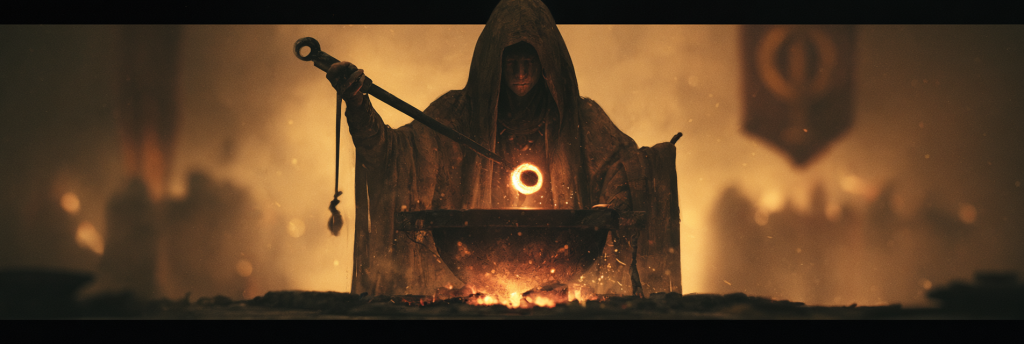
Dormant (Uncommon). +1 to Charisma checks against fiends and elementals. The bearer speaks and reads Solomonic script (a distinct language, not shared with any modern tongue).
Awakened (Rare). As above, plus once per long rest, the bearer may name a fiend or elemental of CR 5 or lower whose true name they know, and force it to spend its next action defending them or fleeing (bearer’s choice) unless it succeeds on a DC 15 Charisma save.
Exalted (Very Rare). As above, plus the Sealed Bottle property (1/week): during a one-hour ritual, the bearer may seal a defeated fiend or elemental of CR 12 or lower into a chosen vessel of brass or glass. The vessel becomes indestructible while the seal holds. Breaking the seal requires the bearer’s true name spoken by another Solomonic bearer.
Trigger. Deed threshold — knowledge, not battle. The Signet wakes as the bearer accumulates the true names of fiends and elementals learned firsthand: three names (Awakened) and twelve names (Exalted). A name told by a demon on request never counts; the bearer must have earned it — from a rite, a bargain honored, a text properly translated, a ghost coerced. The Signet keeps its own tally and does not tell.
On bond’s end. Vanishes more often than not. When a Solomonic bearer dies without naming a chosen successor in Solomonic script, the ring is not found on the body; it turns up years later on a scholar’s finger in some city no one expected, or in a brass box in a market three countries away. When a bearer does name a successor by rite, the ring carries its awakening forward — one of the few tiered items that does. This is what Solomonic manuscripts mean when they warn against naming the wrong heir.
The Wain-Wheel of the Danube
Rooted in Slavic wagon-lore and the Vistani tradition of the family vardo — wagons carrying generations of memory along the same set of roads. Cousin to Vasilisa’s doll (which advised its bearer through her mother’s voice) and to the shrines pilgrims hang at crossroads for the road-spirits’ attention.
A spoked oak wheel from a Vistani wagon, hung around the hub with dozens of small tokens — a wolf’s tooth, a folded strip of vellum, a lock of hair, a copper coin worn smooth. The wheel does not roll; it hangs on the wall of the wagon or is carried strapped to the bearer’s pack. Every token was left on it by a passenger of the wagon that once carried it, and every one holds a memory.
Dormant (Uncommon). +1 to Wisdom (Survival) checks made while traveling with the wheel. Once per long rest, the bearer may touch the wheel and ask a single yes/no question about a road or place they have traveled; the wheel answers if any wagon that carried it has passed there before.
Awakened (Rare). As above, plus once per long rest, the bearer may hold the wheel and consult one memory embedded in a token; the bearer briefly experiences (as a one-minute vision) whatever the token’s owner witnessed. The wheel chooses which memory to show. Some memories are unwelcome.
Exalted (Very Rare). As above, plus the Long Road property (1/week): the bearer places the wheel on any ground under an open sky, spins it, and speaks the name of a place any owner of any token ever saw; the ground within 15 ft becomes a passageway to that place. The passage lasts one minute. It may be traveled in only one direction. Everyone through it is marked by the tokens’ collective attention for one full lunar cycle — Vistani who see them will greet them by name, whether the bearer wants that or not.
Trigger. Deed threshold — miles and hospitality, paired. The Wheel wakes by two things done together: 200 miles traveled and three strangers taken in for a night without asking their business (Awakened); 1,000 miles and one stranger’s life saved on the road at real cost to the bearer (Exalted). The bearer keeps no ledger; the wheel does.
On bond’s end. Carries forward, but partially. When the bearer dies or willingly gives the wheel to another, the Wheel keeps the tokens it has gathered — and its awakening — but the deed count starts over. A new bearer of an Exalted Wheel begins at Exalted; if the Wheel then passes to a third bearer without further deeds, it slips one tier. Left long enough between bearers, a Wain-Wheel finds its way back into a Vistani caravan somehow, and the tally begins again from Dormant.
DM Notes
Tiered items are not intended as loot the party earns for clearing a dungeon. They are items the party carries through dungeons, campaigns, and years of table time — items that develop alongside the characters they were bound to. Handing one out in early play is a promise about the shape of the game: this item will be here at level 5, at level 11, at level 17, and it will look different at each. If the campaign will not run that long, a tiered item is the wrong reward.
They are also promises the DM makes to specific characters. The Sundered Blade wakes when the bearer has stood a losing battle; if the bearer is a paladin who always finds a clean way out, the item never wakes. Solomon’s Signet wakes when the bearer has learned true names, not been given them; a bearer who treats the ring as a hand-me-down of secrets never wakes it. This is a feature. Tiered items reward the players who play into what the item is about, and quietly refuse to reward players who don’t.
When a tiered item is written into a campaign, the DM should note privately what its advancement conditions are, its release conditions, and what happens when the bond ends. Bearers should feel the awakening as an event, not as an achievement notification — and they should feel the loss of an awakening (when a beloved bearer dies and the item comes back Dormant) as a small mourning of its own.
Choose the trigger deliberately. Level-milestone triggers are the easiest to run and read as “the item grew with the party” — good for covenant items and heirloom weapons the group is expected to hold across the campaign. Deed triggers make the item feel like the character earned it personally — good for items whose whole point is a particular kind of behavior. Story-beat and ritual triggers turn the awakening itself into a scene the group will remember. Combined triggers make the item feel rare and formidable — appropriate for items no one has seen fully wake in living memory.
Choose the bond’s-end behavior as deliberately as the trigger. Reverts to Dormant is the default and the mercy — a new bearer gets to earn the item as themselves. Vanishes is a hook — the item is a plot device for a future campaign, or an heirloom the world will encounter again. Carries forward is a promise — this specific line of bearers is something the world remembers.
Finally: the tier system is a house-rule pattern, not a canonical mechanic in any 5e ruleset. The three-item DDB implementation is a workaround for the platform’s inability to model a single item with three states. If the group ever moves off DDB, the pattern collapses to one item with a tier tracker and it works exactly the same at the table.
Notes
0 notes on this entry
Sign in to leave a note. Sign in.