Nosferatu Clan
Nosferatu Clan
Also Known As: The Hidden Clan, the Sewer Lords, the Unseen
Classification: Vampire Clan
Affiliation: Vampire Clans
Primary Region: Central and Eastern Europe
Reach: Transregional
Status: Active, Hidden, and Dispersed
Tags: Nosferatu; vampires; vampire clans; bloodlines; information brokers; spies; underground; hidden roads; monstrous vampires; cities; Vienna; Hungary; Barovia
Overview
The Nosferatu are a vampire clan associated with concealment, physical disfigurement, animals, hidden places, and the collection of secrets. Unlike vampires who pass among mortals through beauty, inherited status, or supernatural charm, most Nosferatu bear visible marks of their curse. Their faces and bodies become distorted after transformation, sometimes gradually and sometimes within a single night.
No two Nosferatu are changed in exactly the same way. One might develop elongated limbs and corpse-pale skin. Another becomes hunched and broad, with coarse features and hands suited to climbing stone. Some resemble plague victims, drowned corpses, predatory animals, or weathered statues. These changes make ordinary mortal life difficult, but they also teach the clan to survive without recognition, praise, or public authority.
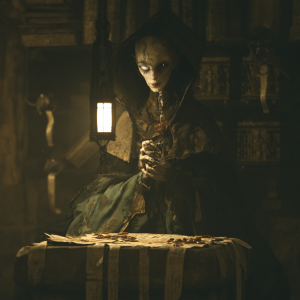
Nosferatu communities are found beneath cities, within abandoned fortifications, along forgotten roads, and inside structures that respectable society no longer acknowledges. They inhabit sewers, cisterns, crypts, mines, collapsed temples, buried aqueducts, ruined districts, and the hollow spaces between old foundations. From these places, they observe the movement of servants, criminals, clergy, merchants, soldiers, and nobles who rarely consider who might be listening beneath the floor.
The clan’s greatest strength is information. Nosferatu know which official accepts bribes, which noble secretly visits the Outer Wards, which monastery sealed a forbidden chamber, and which abandoned tunnel remains in use. They gather secrets not merely for profit, but because knowledge allows them to survive among enemies who would otherwise destroy them on sight.
The Price of Being Seen
Most Nosferatu cannot move openly among mortals without concealment, supernatural influence, or carefully chosen circumstances. Their appearance creates fear before they speak and suspicion before they act. Even those who mean no immediate harm are commonly mistaken for demons, plague-carriers, ghouls, or other creatures of the grave.
This isolation shapes the clan’s culture. Nosferatu tend to judge people by what they do when no audience is present. They are skeptical of public virtue, elegant manners, and declared loyalty because they have watched too many respectable people behave differently behind locked doors.
Many Nosferatu develop sharp, unsentimental humor. Mockery allows them to seize control of reactions they have endured for centuries. A clan member might comment upon their own appearance before another person can, then observe carefully whether the listener responds with disgust, pity, fear, or forced politeness.
Pity is often received poorly. Nosferatu do not generally consider themselves helpless. Their curse has taken much from them, but it has also forced them to become patient, observant, resourceful, and difficult to surprise.
Organization and Membership
Nosferatu organize themselves through warrens: concealed communities built beneath or within mortal settlements. A warren might contain only three vampires and a handful of trusted servants, or it might stretch across several districts through tunnels, cellars, and forgotten infrastructure.
Each warren develops its own customs. Some are communal, sharing shelter, blood, information, and responsibility for newly transformed clan members. Others are controlled by an elder who assigns territory, feeding privileges, and access to collected secrets.
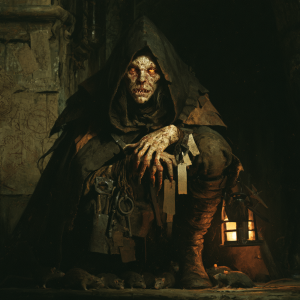
Leadership usually belongs to the vampire who best understands the surrounding city rather than the eldest or physically strongest member. A useful warren leader knows where water flows, where patrols change, which officials can be bribed, which tunnels flood, and how quickly a rumor can travel from a dockside tavern to a noble court.
Nosferatu sires choose childer for resilience, perception, adaptability, or affinity with hidden places. Spies, thieves, investigators, gravekeepers, miners, servants, physicians, prisoners, beggars, smugglers, and people accustomed to being overlooked are common choices.
The transformation is particularly severe, and ethical Nosferatu do not create childer casually. Others use the curse as punishment, deliberately transforming beautiful, proud, or socially powerful mortals to strip away the identities upon which they depended.
Warrens and Hidden Roads
Nosferatu do not think of a city only in terms of streets, gates, and districts. They map rooflines, drainage channels, cellar walls, forgotten wells, construction shafts, burial passages, and spaces left behind as buildings are expanded around older foundations.
These routes form what the clan calls the Buried Roads. The term does not refer to a single connected system. It describes the unseen geography beneath mortal life: the passages through which waste, water, corpses, contraband, vermin, servants, and secrets move without appearing on official maps.
Vienna is especially suited to Nosferatu activity. Its criminal societies already rely upon tunnels, coded marks, hidden warehouses, illicit trade, and a secret dialect carried through ordinary streets and commercial records. Nosferatu rarely control these networks directly, but they observe them, trade with them, and sometimes provide routes even the Black Guilds do not fully understand.
The clan also watches old civic works because buried structures preserve history differently from official archives. A sealed passage, altered foundation, or bricked doorway can reveal what a ruler attempted to remove from public memory.
Information and Secrets
Nosferatu divide information into three broad kinds.
Breath Secrets concern immediate survival. Patrol routes, safe entrances, feeding opportunities, recent disappearances, and dangerous strangers are breath secrets. These are shared freely within a trusted warren because withholding them endangers everyone.
Coin Secrets possess practical value. Blackmail, smuggling routes, trade information, hidden crimes, and political rivalries can be exchanged for protection, favors, blood, or other intelligence.
Grave Secrets are dangerous truths that remain valuable across generations. These include the resting places of vampire elders, suppressed histories, true names, ancient agreements, hidden bloodlines, and knowledge capable of destabilizing kingdoms or churches. Grave secrets are rarely traded without lasting consequences.
A Nosferatu who sells false information damages more than their own reputation. Information networks depend upon reliability, so deliberate deception can result in expulsion from a warren or the loss of access to the Buried Roads.
Nosferatu are not compelled to reveal everything they know. Their preferred answer is often technically truthful but incomplete. They expect others to ask precise questions and regard careless assumptions as the questioner’s responsibility.
Animals and Vermin
Rats, bats, insects, stray dogs, ravens, and other creatures living near human settlements often tolerate Nosferatu more readily than people do. Some clan members can communicate with such animals, direct their movement, or perceive distant places through their senses.
Nosferatu do not necessarily regard these creatures as disposable tools. A warren may maintain breeding chambers, feeding stations, roosts, and passages designed for animal movement. Individual vampires might know particular swarms or packs over many generations.
The sudden disappearance of rats from a cellar can be as meaningful to a Nosferatu as the arrival of soldiers. Animals often sense supernatural intrusion, poison, fire, flooding, and structural instability before mortal observers recognize the danger.
Not every gathering of rats indicates Nosferatu activity. Experienced investigators look for unusual coordination: vermin avoiding one corridor, gathering near a specific residence, carrying bits of thread or parchment, or appearing wherever a particular traveler goes.
Concealment and Observation
Nosferatu possess supernatural abilities associated with silence, concealment, and the manipulation of attention. A clan member might remain unnoticed in an occupied chamber, cross an illuminated courtyard without drawing the eye, or alter how others perceive their face.
These powers are not always literal invisibility. Witnesses might look directly at the vampire but remember only a servant, a shadow, a bundled traveler, or an empty doorway. The mind supplies an ordinary explanation and moves on.
Nosferatu value mundane concealment as much as supernatural power. A hidden route, appropriate clothing, bribed porter, false maintenance order, or carefully timed distraction remains useful when magic fails.
The clan’s most capable spies combine supernatural obscurity with intimate knowledge of routine. They know where people expect to see servants and where no one thinks to look at all.
Relations with Mortals
Nosferatu frequently maintain relationships with people society overlooks. Beggars, gravekeepers, night laborers, sewer workers, laundresses, porters, miners, servants, prisoners, rat-catchers, and orphaned children might exchange information with a warren without understanding its full nature.
Some Nosferatu protect these communities because they recognize a shared condition: survival beneath the notice of those who control wealth and law. Others exploit them precisely because their disappearance is unlikely to provoke serious investigation.
A Nosferatu patron might arrange food, shelter, medical aid, hidden passage, or the disappearance of a dangerous creditor. Payment is often requested in information rather than coin. A servant might be asked to remember which guests entered a house after sunset. A gravedigger might report coffins buried empty. A child might leave a particular cellar window unlatched.
Trust develops slowly. Nosferatu know how quickly a frightened mortal can become an informant for the Church, city watch, or vampire hunter.
Relations with Other Vampire Clans
Nosferatu are useful to every vampire clan and fully trusted by none.
Ventrue and Lasombra depend upon Nosferatu intelligence but dislike relying upon vampires outside their hierarchies. Nosferatu respond by learning which secrets their patrons would pay most to conceal.
Brujah seek evidence of corruption and hidden oppression. Nosferatu can provide it, though they are often frustrated by Brujah who reveal sources through dramatic action.
Malkavians and Nosferatu sometimes cooperate effectively. Nosferatu gather facts while Malkavians perceive connections hidden within them. The partnership becomes dangerous when neither can determine whether a discovered pattern reflects truth, prophecy, or deliberate manipulation.
Tremere seek access to Nosferatu blood, subterranean refuges, and forgotten magical sites. Nosferatu distrust their habit of treating every curse as a subject for experimentation.
Nosferatu rarely forget insults concerning their appearance. More importantly, they rarely forget who offered respect before realizing how useful the clan could be.
Symbols and Traditions
Nosferatu symbols include hooded faces, broken masks, keys beneath stones, rats carrying scrolls, open eyes inside closed mouths, and labyrinths with no marked entrance.
Gray, brown, black, dark green, and rust-red commonly appear in their clothing and markings. Clan symbols are often scratched where ordinary people will not notice them: beneath bridge railings, behind drain covers, inside chimneys, under tables, or along the lower edges of doors.
Common Nosferatu sayings include:
- “Every wall has two sides.”
- “The city speaks downward.”
- “Ask who cleaned the room.”
- “Nothing buried stays silent.”
- “A secret is only safe until someone needs it.”
- “The unseen are not the same as the absent.”
- “Beauty closes more eyes than darkness.”
Nosferatu introductions sometimes involve exchanging one true but harmless secret. The practice demonstrates that both parties understand the value of accurate information without placing either in immediate danger.
Encounters with the Nosferatu
Adventurers might encounter Nosferatu while investigating disappearances, navigating buried ruins, pursuing smugglers, searching for forgotten records, or seeking a route into a guarded location.
The clan might offer information concerning a vampire court, criminal family, Church official, hidden entrance, or missing person. Payment could include another secret, the recovery of a stolen map, protection for a mortal informant, removal of a dangerous creature from a tunnel, or a promise not to reveal the warren’s location.
Nosferatu rarely provide answers without context. They want to know why the characters are asking, who else knows of the investigation, and what will happen if the information becomes public.
Characters who threaten a Nosferatu informant may receive technically accurate information designed to produce the worst possible interpretation. Those who negotiate respectfully can gain access to truths no official archive records.
GM ONLY: Nosferatu Clan
The Truth
Nosferatu disfigurement is a supernatural expression of the clan’s curse. Illusions, masks, and shapeshifting can conceal it temporarily, but the underlying transformation remains. The precise form often reflects the circumstances of the Embrace, the sire’s lineage, and qualities the new vampire once relied upon or concealed.
The clan’s information network is more extensive than most vampire elders realize. Nosferatu do not maintain a unified archive, but warrens exchange warnings, maps, names, and fragments of grave secrets through travelers, animal messengers, coded graffiti, smugglers, and mortal intermediaries.
No single Nosferatu knows everything. The power of the network lies in assembling details gathered by people who were each present for only a small portion of an event.
The clan’s greatest fear is not exposure but centralization. A complete archive would become an irresistible target for Strahd, the Tremere, the Church, the Solomons, and every ambitious ruler seeking control over hidden knowledge. Nosferatu deliberately divide important secrets among multiple keepers.
Nosferatu in Vienna
Vienna’s layered construction, crowded wards, criminal families, river traffic, forgotten cisterns, and strict commercial systems provide ideal conditions for Nosferatu observation. The city’s underworld already communicates through coded marks, altered ledgers, gestures, colors, and a Rotwelsch-like secret dialect. Nosferatu have learned these systems without belonging fully to any single family or Black Guild.
The Vienna warren occupies disconnected sites rather than one central lair. Its members call the network the Lower Parliament, a dry joke about the rulers beneath the rulers. Meetings occur in abandoned pumping chambers, sealed crypts, derelict bathhouse tunnels, and old foundations beneath warehouses.
The Lower Parliament trades information with several criminal families while preventing any one syndicate from monopolizing the Buried Roads. The Dolbenari exchange forged documents and copied records. The Strigani bring news from beyond the walls. House Malvaste pays for concealed access to clients and rivals. The Kincaid Syndicate is regarded as profitable but dangerously loud. These relationships are inferred from the established structures of Vienna’s underworld and should be treated as new Gazetteer canon rather than preexisting source material.
The Lower Parliament knows that Crimson Mercy uses hidden chapels, old cisterns, and blood rituals beneath the Outer Wards. Its members initially avoided the operation because the dead rats and altered sleepers suggested a supernatural patron capable of tracing observers through blood. A Nosferatu informant can provide the characters with routes into the Shrine of the Bleeding Word, but only after the blood mirror is disrupted or protected against.
Nosferatu in Barovia
Strahd permits Nosferatu to exist within Barovia because they are useful and because eliminating them completely would require destroying infrastructure he relies upon. He does not grant them independence. Known clan members must provide information when summoned, and Castle Ravenloft punishes any warren proven to have concealed an immediate threat to his rule.
Barovian Nosferatu refer to their scattered network as the Hollow Court. It extends through abandoned cellars, grave tunnels, mine workings, ruined fortifications, drainage passages, and hidden spaces beneath older settlements.
The Hollow Court knows more about daily life in Barovia than the nobles of Castle Ravenloft. Its members track missing travelers, secret burials, tax shipments, wolf movements, Church visitors, and the movement of Strahd’s servants.
They do not know all of Castle Ravenloft’s secrets. The castle changes, contains sealed passages older than many members of the court, and is inhabited by creatures capable of noticing even supernatural concealment.
The Hollow Court has preserved fragments concerning the Concord of Dawn and Dusk. None of its keepers possesses the full agreement. One knows the names of mortal witnesses. Another knows which Church records were removed. A third remembers where a dead negotiator was secretly buried. This division is intentional.
The Hidden Witnesses
Nosferatu have observed many of Barovia’s major events without becoming central participants. They witnessed the collapse of Brujah resistance, clerical compromises, the removal of records, and the gradual transformation of public fear into routine obedience.
This knowledge does not make the clan heroic. Nosferatu often chose survival over intervention. Some sold information to Strahd. Others warned threatened communities but refused to reveal themselves. A few profited from both sides.
The clan understands better than most that witnessing injustice does not prevent complicity. This gives individual Nosferatu a mixture of defensiveness, guilt, pragmatism, and contempt for those who believe secret knowledge automatically makes them virtuous.
Goals and Methods
Immediate Goals
Nosferatu seek to identify newly active tunnels, monitor foreign agents, protect their mortal informants, and learn why Strahd has taken an interest in the recently arrived adventurers.
They also want to determine whether disturbances involving the Solomons, Severance, Umbra, and the ancient foundations beneath Barovia threaten the Buried Roads.
Strategic Goals
The Hollow Court wants to preserve its distributed archives and ensure that no vampire clan, Church order, or criminal faction gains complete control over subterranean movement and hidden information.
Some members want to establish stronger connections with Vienna’s Lower Parliament. Barovia’s mists make communication unreliable, and those who carry messages beyond the valley are exceptionally valuable.
Existential Goals
The clan seeks continued survival without becoming entirely dependent upon rulers who despise it. Some Nosferatu dream of building a hidden commonwealth beneath mortal cities. Others regard any centralized clan society as an invitation to destruction.
Methods
Nosferatu methods include:
- patient surveillance;
- exchange of limited but accurate information;
- infiltration through neglected routes;
- animal scouts;
- concealed shelters and escape passages;
- cultivation of servants and laborers;
- blackmail used sparingly;
- selective leaks designed to weaken rivals;
- divided archives;
- allowing other factions to take credit for outcomes the clan arranged.
Nosferatu prefer leverage that remains useful after it is revealed. A bribe can be traced. A tunnel known only to one side can change the balance of an entire conflict.
Knowledge of the Nosferatu
The following information is cumulative. Characters with criminal, urban, mining, gravekeeping, or vampire-hunting experience may know the DC 10 information without a check.
Intelligence (History)
DC 10: Nosferatu are visibly transformed vampires associated with hidden places, vermin, concealment, and the sale of secrets.
DC 15: Nosferatu organize themselves into warrens beneath cities and maintain informal information networks that cross political borders.
DC 20: Their networks preserve knowledge excluded from official archives, including hidden bloodlines, political crimes, abandoned treaties, and the resting places of vampire elders.
DC 25: Nosferatu deliberately divide grave secrets among multiple keepers. Discovering one fragment usually reveals the existence of other fragments without identifying who holds them.
Intelligence (Investigation)
DC 10: The character recognizes signs that a cellar, drain, crypt, or service passage receives more traffic than its apparent purpose explains.
DC 15: Scratches, tied cords, displaced stones, rat paths, and maintenance marks form a route code used by people moving beneath the settlement.
DC 20: Several apparently unrelated routes belong to a coordinated information network rather than smugglers acting independently.
DC 25: The network has intentionally allowed one route to be discovered so that observers will overlook a second, older system beneath it.
Intelligence (Arcana)
DC 12: Nosferatu possess supernatural concealment that affects attention and memory rather than merely bending light.
DC 16: Their abilities can cause observers to accept an ordinary explanation for something visibly unusual.
DC 20: Strong emotion, direct physical interaction, certain divinations, and wards designed to expose undead creatures can disrupt Nosferatu concealment.
DC 25: Powerful clan members can extend concealment to companions, passages, or small gatherings, causing entire events to become difficult to recall accurately.
Wisdom (Survival)
DC 12: The character recognizes that local vermin are avoiding or repeatedly approaching a particular structure.
DC 16: Animal movement suggests deliberate feeding, training, or supernatural direction.
DC 20: The animals are carrying information through sound, scent, attached materials, or repeated routes.
DC 25: The visible animals are a decoy. The actual observation point lies elsewhere and was positioned to watch anyone who followed them.
Wisdom (Insight)
When negotiating with a Nosferatu information broker, the GM can call for a Wisdom (Insight) check.
DC 13: The vampire is answering the exact wording of the question rather than its obvious intent.
DC 17: The vampire is withholding context that would change how the information is interpreted.
DC 21: The vampire considers the character a potential long-term source and is testing which kinds of secrets they notice, protect, and trade.
Running the Nosferatu
Nosferatu should feel observant, practical, and difficult to impress. Their appearance may be horrifying, but their behavior need not be feral or theatrical.
A Nosferatu might be courteous, sardonic, scholarly, suspicious, nurturing, or coldly commercial. What unites the clan is awareness of what others overlook.
When portraying a Nosferatu, determine:
The Territory. What hidden place do they know better than anyone else?
The Secret. What information are they currently protecting?
The Informant. Which mortal or animal source do they genuinely value?
The Shame. What event did they witness but choose not to prevent?
Nosferatu admire careful questions, reliability, discretion, practical compassion, and respect shown before their usefulness becomes apparent. They dislike pity, unnecessary attention, careless exposure, aesthetic disgust presented as morality, and people who demand every secret while offering nothing in return.
A Nosferatu should rarely provide a direct answer to a poorly framed question. This is not constant trickery. Information has value, and precision reveals whether the questioner understands what they are asking.
Signs of Their Presence
Use the following details before introducing a Nosferatu or warren:
- Rats gather around one wall but never cross beneath it.
- A drain cover has been cleaned while those nearby remain rusted.
- Several servants know an unofficial route through a noble estate but cannot remember who showed it to them.
- A beggar repeats a private phrase spoken inside a locked room.
- A cellar wall sounds hollow where no chamber appears on the plans.
- Wax seals remain intact, but letters have clearly been read.
- A grave contains a second, narrower passage beneath the coffin.
- Food disappears from kitchens in small, regular amounts rather than through obvious theft.
- A night watchman reports an empty alley but cannot explain the second set of footprints.
- Different criminal groups use the same hidden doorway while each believes it controls access.
- A child leaves scraps near a drain and receives small objects in return.
- A cluster of bats leaves a tower moments before supernatural violence begins.
Representatives
The Warren Keeper
An elder who manages routes, feeding arrangements, informants, and disputes within a hidden community. The Keeper knows which secrets must be shared and which could destroy the warren.
The Rat Scribe
A meticulous collector who records information on narrow strips of parchment carried through animal passages. The Scribe values accuracy more than speed.
The Masked Broker
A Nosferatu who meets clients while concealed by layered veils, a plague mask, heavy robes, or supernatural disguise. The Broker sells information but never reveals the warren’s location.
The Tunnel Saint
A clan member who protects laborers, beggars, fugitives, and children living beneath official notice. Their compassion is genuine but often possessive.
The Carrion Listener
A vampire who watches battlefields, graveyards, execution grounds, and places where bodies are discarded. The Listener knows what authorities attempted to bury.
The Newly Hidden
A recently transformed Nosferatu abandoned by their sire before learning how to feed, conceal themselves, or navigate clan society. Their panic risks exposing an entire warren.
Resources and Influence
Nosferatu warrens might possess:
- extensive maps of tunnels and hidden infrastructure;
- mortal informants throughout servants’ halls, markets, prisons, docks, and graveyards;
- trained rats, bats, dogs, ravens, or insect swarms;
- concealed shelters and emergency routes;
- blackmail gathered over generations;
- access to unrecorded burial sites;
- stolen letters and copied ledgers;
- knowledge of criminal and political movements;
- hidden caches of food, weapons, coin, and blood;
- the ability to move people through guarded districts unseen.
Their influence is limited by sunlight, flooding, fire, disease, collapsed structures, internal territorial disputes, dependence upon mortal informants, and the catastrophic danger created when a warren’s location becomes public.
Complications
The Secret Protects a Villain
A Nosferatu refuses to reveal a murderer’s identity because doing so would expose dozens of innocent informants.
The False Warrant
A discovered tunnel appears to belong to the Nosferatu but was created by another faction to draw hunters toward the warren.
The Price Is Silence
The clan offers information capable of saving a settlement, but the characters must agree never to reveal how the warning was obtained.
The Compromised Informant
A trusted mortal source has been blood-bound by another vampire clan and now feeds altered information into the network.
The Necessary Passage
The only route into an enemy stronghold passes through a Nosferatu sanctuary containing vulnerable childer and mortal dependents.
The Witness Who Did Nothing
A Nosferatu knows the full truth of an old atrocity because they watched it happen and chose not to intervene.
Adventure Use
The City Beneath the City
Construction breaks into an unknown district beneath Vienna. Several factions race to claim it, but the Nosferatu insist the chambers were sealed to contain something rather than to hide treasure.
Three Pieces of the Concord
The characters learn that separate Nosferatu keepers hold the names, location, and final testimony connected to a concealed agreement. Each demands a different service before surrendering their fragment.
The Rats Leave First
Every rat vanishes from a crowded neighborhood during the same night. A Nosferatu broker offers to explain why, but only after the characters recover a missing animal keeper.
The Empty Archive
A secure Church archive is discovered stripped of every useful document without a lock being broken. The Nosferatu did not steal the records. They want the characters to learn who knew exactly which pages to take.
The Monster in the Drain
Citizens blame a Nosferatu for several disappearances beneath the Outer Wards. The actual killer is using the warren’s routes and leaving mutilated bodies where the clan will be accused.
Development
Nosferatu become more cooperative when characters:
- ask precise questions;
- protect mortal informants;
- keep the location of a warren secret;
- provide useful information without exaggeration;
- recognize neglected witnesses;
- navigate hidden places without damaging them;
- show respect before learning the vampire’s identity;
- recover records that powerful institutions attempted to erase.
Nosferatu become hostile when characters:
- expose a hidden route publicly;
- threaten informants or dependents;
- offer false information as fact;
- destroy tunnels without considering who uses them;
- treat disfigurement as proof of moral corruption;
- demand access to grave secrets without equivalent payment;
- bring hunters, clergy, or rival vampires near a warren;
- repeat private information to demonstrate how much they know.
An alliance with the Nosferatu should change how characters perceive settlements. Streets, courts, and official records reveal only the visible city. The clan knows what moves beneath it.
Notes
0 notes on this entry
Sign in to leave a note. Sign in.