Brujah Clan
Also Known As: The Learned Clan, the Fire-Blooded
Classification: Vampire Clan
Primary Region: Mediterranean Basin and Southeastern Europe
Reach: Transregional
Status: Active, Fragmented, and Hidden
Overview
The Brujah are a vampire clan associated with fierce conviction, physical power, scholarship, and rebellion against entrenched authority. Popular tales depict them as warriors who rise against kings and tyrants, but older histories describe philosophers, jurists, teachers, and political agitators as often as soldiers. To the Brujah, strength without purpose is mere brutality, while an ideal that cannot survive challenge is not worth defending.
Members of the clan are found throughout the Mediterranean and southeastern Europe, particularly in regions shaped by conquest, occupation, religious conflict, and failed revolution. They rarely control large territories for long. Brujah domains tend to form around militant cities, independent communities, universities, rebellious noble houses, mercenary companies, and settlements whose people already distrust distant rulers.
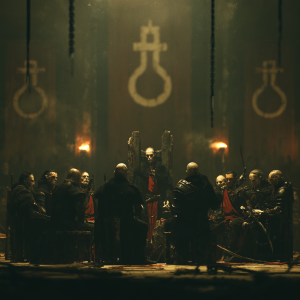
The Brujah reputation is divided. Some remember them as protectors who helped mortals overthrow cruel masters. Others call them instigators who ignite uprisings and abandon the survivors when those movements fail. Both accounts contain truth. Brujah are often drawn to resistance, but they do not always agree on what should replace the authority they destroy.
Philosophy and Conviction
Brujah culture places great importance on conviction. A Brujah is expected to know what they believe, why they believe it, and what price they are willing to pay for it. Elders sometimes test younger clan members through prolonged debate, deliberate insult, or demands that force them to choose between safety and principle.
The clan does not possess a single political doctrine. Some Brujah defend common laborers and conquered peoples. Others believe that only those strong enough to seize freedom deserve it. A Brujah might oppose monarchy, organized religion, vampire courts, mercantile power, foreign occupation, or simply the authority of their own sire. Their unity lies less in a shared vision of society than in a distrust of unquestioned rule.
This tendency makes the clan difficult to govern. Brujah cells frequently divide over methods, leadership, and the compromises necessary to survive. A successful revolution can fracture a cell as easily as defeat once its members begin arguing over what comes next.
Organization and Membership
The Brujah maintain no universal hierarchy. Their members gather in circles, assemblies, war bands, debating societies, hidden schools, and revolutionary cells. Leadership usually belongs to whoever commands the respect of the group at that moment. Age matters, but an elder who cannot defend their position may lose influence to a younger and more persuasive rival.
Many Brujah gatherings begin with debate. Members present grievances, challenge proposed actions, and demand that leaders explain what they intend to build rather than merely what they hope to destroy. These gatherings can resemble philosophical councils one evening and turn into violent confrontations the next.
The clan is selective when creating new vampires. Brujah sires often choose soldiers, scholars, dissidents, organizers, advocates, and people who refused to yield under pressure. Unfortunately, some are chosen for the strength of their anger rather than the discipline behind it. Such childer may become dangerous even to those they intended to protect.
Strength and Temper
Brujah are believed to possess exceptional physical strength and speed. Stories describe them crossing a chamber before a candle can flicker, bending iron fittings, or striking with enough force to break stone. These abilities make them formidable combatants, but the clan’s greatest danger is often the speed with which conviction becomes fury.
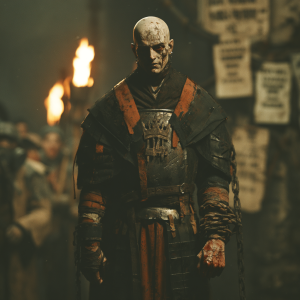
A Brujah insulted, humiliated, or confronted with a symbol of oppression may react with sudden violence. Older members cultivate rigid disciplines to control this temper. Some recite arguments backward, carry written statements of principle, submit to ritual debate, or appoint trusted companions empowered to restrain them.
This anger is not always mindless. A calm Brujah can be more dangerous than an enraged one, particularly when they have spent decades turning resentment into strategy.
Relations with Mortals
Brujah often form close relationships with mortals involved in political, military, or social struggle. They recruit from universities, military companies, displaced noble houses, dockyards, mining communities, frontier settlements, and communities resisting occupation. These mortal associates might never learn that their patron is a vampire.
Some Brujah genuinely admire mortal courage and regard short human lives as a source of urgency vampires have lost. Others treat mortal revolutionaries as tools, measuring movements by the pressure they place upon established rulers. A Brujah patron might fund a rebellion, provide weapons, train its leaders, and still refuse to explain what will happen if the uprising succeeds.
The clan’s feeding practices vary widely. Some take blood only from willing followers or defeated enemies. Others claim a revolutionary cause while preying upon the very people they profess to liberate. Brujah judge one another harshly for hypocrisy, though accusation and actual accountability are not always the same thing.
Relations with Other Vampire Clans
Brujah frequently clash with the Ventrue over authority, lineage, and the right to rule. Brujah accuse the Ventrue of treating domination as a sacred duty. Ventrue regard the Brujah as destructive idealists who mistake disorder for freedom.
Relations with the Lasombra are equally tense. Both clans understand power, but the Brujah tend to prefer visible struggle while the Lasombra cultivate influence through institutions, dependence, and carefully managed fear. Brujah often describe them as tyrants who refuse to show their crowns.
The Tremere are distrusted for their secrecy and efforts to control vampirism through ritual. Nosferatu sometimes serve as valuable informants, although Brujah impatience can endanger the careful networks upon which the Nosferatu rely. Malkavians are alternately treated as prophets, provocateurs, and insufferable distractions, sometimes all during the same conversation.
Symbols and Traditions
Brujah rarely maintain elaborate heraldry, but red, black, and iron are common in their symbols. Broken crowns, open chains, raised fists, split towers, burning books, and hammers striking anvils appear in their graffiti, seals, banners, and coded correspondence.
Their slogans are short and meant to be remembered:
- “No crown lasts forever.”
- “Fear belongs to those who wield it.”
- “A law without consent is only a threat.”
- “Name what you would build.”
- “The night has no rightful master.”
Such phrases can be sincere statements, recruitment tools, or warnings left before violence.
Encounters with the Brujah
Adventurers might encounter Brujah through a protest movement, mercenary company, dissident scholar, rebellious noble house, or community preparing to resist a powerful enemy. A Brujah patron might hire the characters to free prisoners, recover suppressed records, expose corruption, arm a resistance movement, or eliminate a leader whose rule has become intolerable.
The patron is likely to ask difficult questions before offering aid. Why do the characters oppose their enemy? What will replace that enemy? Who will bear the cost? What compromises have they already accepted? The Brujah respect clear answers more than virtuous language.
Characters dealing with the clan should not mistake shared enemies for shared principles. A Brujah might support the overthrow of a tyrant while opposing the Church, noble house, or military authority the characters hope to install afterward.
GM ONLY: Brujah Clan
The Truth
The Brujah are among the strongest opponents of the political settlement that governs relations between vampires and the Church of Lathander. While other clans often favor secrecy, stable feeding arrangements, controlled territories, and negotiated limits, many Brujah believe such settlements transform predation into an accepted institution.
Before the Concord of Dawn and Dusk was formalized, Brujah cells in Barovia argued that vampires should either rule openly and accept resistance or be destroyed openly. They rejected a system in which Strahd maintained dominion while religious authorities preserved the appearance of opposition.
The failed cell beneath the Durst Estate grew from this belief. The Dursts were not vampires but mortal collaborators who provided shelter, blood, and access to local society. They believed the Brujah were preparing a popular uprising. In truth, the cell was also testing whether mortal fear, ritual bloodshed, and political disorder could weaken Strahd’s singular control over Barovia.
The experiment failed. Strahd allowed it to continue long enough to study its effects, while Church authorities refused to intervene until containment was threatened. The cell was destroyed, the Dursts were abandoned, and the house was left as a warning against resistance. Its surviving horrors became evidence that rebellion leads only to ruin rather than evidence that powerful institutions knowingly allowed the ruin to continue.
This failure still divides the Brujah. Some regard the cell as martyrs betrayed by both Church and crown. Others consider them reckless extremists who sacrificed mortals to prove a theory. A few know that both interpretations are true.
Brujah in Barovia
Brujah activity in Barovia is fragmented. Strahd has prevented the clan from forming a recognized court, but isolated vampires, mortal adherents, ghouls, and philosophical descendants remain. They operate within archives, labor communities, military households, criminal networks, and institutions whose members resent Castle Ravenloft but lack the strength to oppose it openly.
Anya Volkova, the Keeper of Records associated with the Citadel Four, is secretly tied to the Brujah. She uses her access to population records, political reports, hidden resources, and assessments of loyalty to identify weaknesses in Strahd’s rule. She presents herself as a controlled scholar rather than an agitator, but beneath that restraint lies a long-cultivated desire to escape Strahd’s influence and prepare the conditions for his downfall.
Anya should not be presented as the unquestioned leader of every Brujah remnant. She is one of the few positioned to connect scattered dissidents, and that makes her both valuable and suspect. More radical cells believe she has spent too long serving the regime. More cautious members fear she is repeating the same mistake made beneath the Durst Estate by treating mortal rebellion as an experiment.
Goals and Methods
Immediate Goals
Brujah in Barovia seek to locate surviving dissidents, recover records of earlier rebellions, identify weaknesses within Strahd’s administration, and determine whether newly arrived adventurers represent genuine resistance or another temporary disruption.
Strategic Goals
Most Brujah want to break the assumption that Strahd’s rule is inevitable. They seek visible evidence that Castle Ravenloft can be resisted, its agents can be defeated, and its authority can fail without the entire valley collapsing.
Existential Goals
The clan is divided over Barovia’s future. Some want a mortal republic or council of settlements. Some would replace Strahd with a coalition of vampires and mortals. Others believe no stable order can emerge until every institution shaped by the Concord is destroyed.
Methods
Brujah methods include recruitment, propaganda, public defiance, prison breaks, targeted violence, theft of official records, arming local communities, exposure of institutional hypocrisy, and the creation of events that force neutral powers to choose a side.
The most disciplined Brujah build resistance slowly. The least disciplined mistake escalation for progress.
Knowledge of the Brujah
The following results are cumulative. A character trained by an established vampire-hunting order may know the DC 10 result without a check. A character who has explored the Durst Estate can attempt checks concerning the Barovian Brujah with advantage once they have recovered relevant records or inscriptions.
Intelligence (History)
DC 10: Brujah are a vampire clan known for warriors, dissidents, philosophers, and resistance to authority.
DC 15: The clan has supported revolts against both mortal and vampire rulers. Many of these movements fractured after victory because Brujah cells could agree on what they opposed but not what should replace it.
DC 20: Brujah cells operated in Barovia before the current political order was established. Surviving references describe them as opponents of both Strahd and accommodation between the vampire clans and the Church.
DC 25: Fragmentary records suggest a Brujah-backed uprising used a respectable Barovian household as cover. Church and court records concerning the incident were deliberately separated, altered, or destroyed.
Intelligence (Religion)
DC 12: Lathandric writings usually portray the Brujah as violent heretics who exploit mortal anger.
DC 16: Some suppressed Church accounts concede that Brujah accusations of clerical compromise were not entirely false, even when their methods were condemned.
DC 20: Certain Church officials historically preferred a predictable vampire ruler to uncontrolled clan warfare. Brujah agitators threatened that stability and were sometimes treated as a greater immediate danger than compliant undead.
DC 25: A small number of sealed theological texts argue that the Church’s response to early Brujah rebellions helped establish the logic later formalized by the Concord of Dawn and Dusk.
Intelligence (Arcana)
DC 12: Brujah bloodlines commonly produce supernatural strength and speed.
DC 16: Their blood also intensifies emotional states, particularly anger linked to humiliation, domination, or perceived betrayal.
DC 20: Certain Brujah rites use shared blood, rhythmic speech, public confession, and escalating emotion to bind a group around a common grievance.
DC 25: The failed Barovian cell attempted to use fear and bloodshed not merely as sacrifice but as pressure upon the supernatural structure of Strahd’s domain. The theory was flawed, but not entirely without magical foundation.
Wisdom (Insight)
When a character discusses authority, oppression, or rebellion with a suspected Brujah, the GM can call for a Wisdom (Insight) check.
DC 13: The vampire is less interested in whether the character hates a ruler than in what the character is willing to risk.
DC 17: The vampire is testing whether the character possesses principles or merely grievances.
DC 21: The vampire has already identified the character’s strongest resentment and is deciding whether to cultivate it, challenge it, or use it.
Running the Brujah
Brujah should feel intense without all behaving as shouting revolutionaries. Their defining quality is conviction under pressure.
A Brujah scholar might remain perfectly calm while dismantling every justification offered by a noble. A Brujah soldier might speak little but refuse every order not personally justified. A Brujah organizer might be warm, patient, and deeply attentive until someone suggests that suffering is necessary for stability.
When portraying a Brujah, determine:
The Cause. What form of authority do they oppose?
The Vision. What do they believe should replace it?
The Compromise. What have they already accepted in order to survive?
The Hypocrisy. In what way have they become similar to the power they condemn?
Brujah admire courage, clarity, endurance, and the willingness to act. They despise passive obedience, inherited entitlement, evasive language, and appeals to order that ignore who benefits from that order.
They may respect an honest enemy more than an uncertain ally.
Signs of Their Presence
Use the following signs before introducing a Brujah cell or representative:
- A crown, chain, or tower has been deliberately split in a mural or carved relief.
- Short political phrases appear repeatedly in different hands.
- Laborers, students, soldiers, or prisoners use the same unfamiliar greeting.
- A public notice has been corrected in red ink with questions rather than insults.
- Weapons are hidden in places associated with education, worship, or civic administration.
- A local authority has banned gatherings of more than five people without explaining why.
- Someone has copied restricted court records and circulated them without payment.
- A debate ends with participants touching a scar, blade, or iron token before leaving separately.
- A burned meeting place contains no bodies because everyone expected violence.
Representatives
Anya Volkova, Keeper of Records
Anya is a restrained and highly intelligent Brujah operative positioned within Barovia’s administration. She gathers information, identifies weaknesses, and cultivates allies while appearing to serve the system she intends to undermine. She can become a patron, informant, rival strategist, or warning about the compromises required to resist Strahd from within.
The Firebrand
A warrior, labor organizer, preacher, or former soldier who turns local grievances into immediate action. The Firebrand is brave and persuasive but may escalate before a community is ready.
The Dissident Scholar
A historian or philosopher who preserves banned records and teaches others to recognize the language used to justify domination. The scholar may know more about the Concord than is safe to reveal.
The Broken Revolutionary
A survivor of a failed uprising who no longer trusts movements, leaders, or promises. They can identify every likely point of failure but resist committing to another cause.
The Iron Childe
A recently created Brujah chosen for courage during a crisis. Their sire expected a weapon but created someone unwilling to accept another master.
Resources and Influence
Brujah cells might command:
- hidden arms and armor;
- sympathetic laborers, students, soldiers, and prisoners;
- copied court or Church records;
- abandoned forts, meeting halls, cellars, and tunnels;
- combat instructors and veteran organizers;
- access to smugglers and dissident clergy;
- coded networks built around debates, songs, and public notices;
- vampires or ghouls capable of direct, overwhelming violence.
Their influence is limited by factional disputes, impatience, infiltration, weak long-term planning, and the tendency of powerful members to confuse personal conviction with collective consent.
Complications
The Revolution Has Two Leaders
Two Brujah cells want Strahd weakened but disagree over what should follow. Each asks the characters to withhold support from the other.
A Just Cause, a Monstrous Patron
A genuine community uprising depends upon a Brujah who feeds from its leaders and quietly removes anyone who challenges their strategy.
The Records Are Bait
Documents proving official complicity in an old atrocity have been placed where rebels will find them. Strahd intends to identify every person who acts upon the information.
The Sire’s Rebellion
A Brujah asks the characters to help destroy a tyrannical sire, but the conflict is also a struggle over territory and feeding rights.
The Cost of Visibility
A symbolic victory would inspire Barovia but expose an entire network of hidden supporters to retaliation.
Adventure Use
The Red Corrections
Official notices throughout a settlement are being altered overnight. Each correction reveals a fact the authorities concealed. The final notice names a character as proof that resistance is possible.
The Last Assembly
Representatives of several Brujah remnants gather to decide whether to support an open uprising. One delegate is an agent of Castle Ravenloft, and another intends to begin the rebellion before the vote concludes.
The Durst Ledger
A surviving account book identifies noble families, clergy, and merchants who supplied the failed cell beneath the Durst Estate. Some were collaborators. Others were unknowingly used. Several families still hold power.
The Unbroken Prisoner
A Brujah vampire has been held beneath a Church institution for decades. Releasing the prisoner could expose the Concord’s hidden history, but captivity has not made them merciful.
What Comes After
A local tyrant is vulnerable, and a Brujah patron offers everything necessary to remove them. Before acting, the characters must determine who the patron intends to place in power afterward.
Development
Brujah become more cooperative when characters:
- articulate what they intend to build after defeating an enemy;
- accept personal risk rather than shifting it onto civilians;
- expose institutional hypocrisy with evidence;
- protect people who resisted authority;
- preserve records of failed rebellions;
- challenge a Brujah’s argument honestly rather than agreeing for convenience.
Brujah become hostile when characters:
- defend oppression solely in the name of stability;
- promise support and withdraw when the cost becomes visible;
- conceal evidence to protect an institution;
- treat mortal supporters as expendable;
- demand obedience without explanation;
- overthrow a ruler and reproduce the same methods under a new banner.
A Brujah alliance should always carry momentum. Once the clan believes the characters are committed, it expects them to continue moving. Hesitation is interpreted not as caution but as the beginning of surrender.
Notes
0 notes on this entry
Sign in to leave a note. Sign in.